How to Choose Safe Toys for Your Pet: 7 Essential Tips

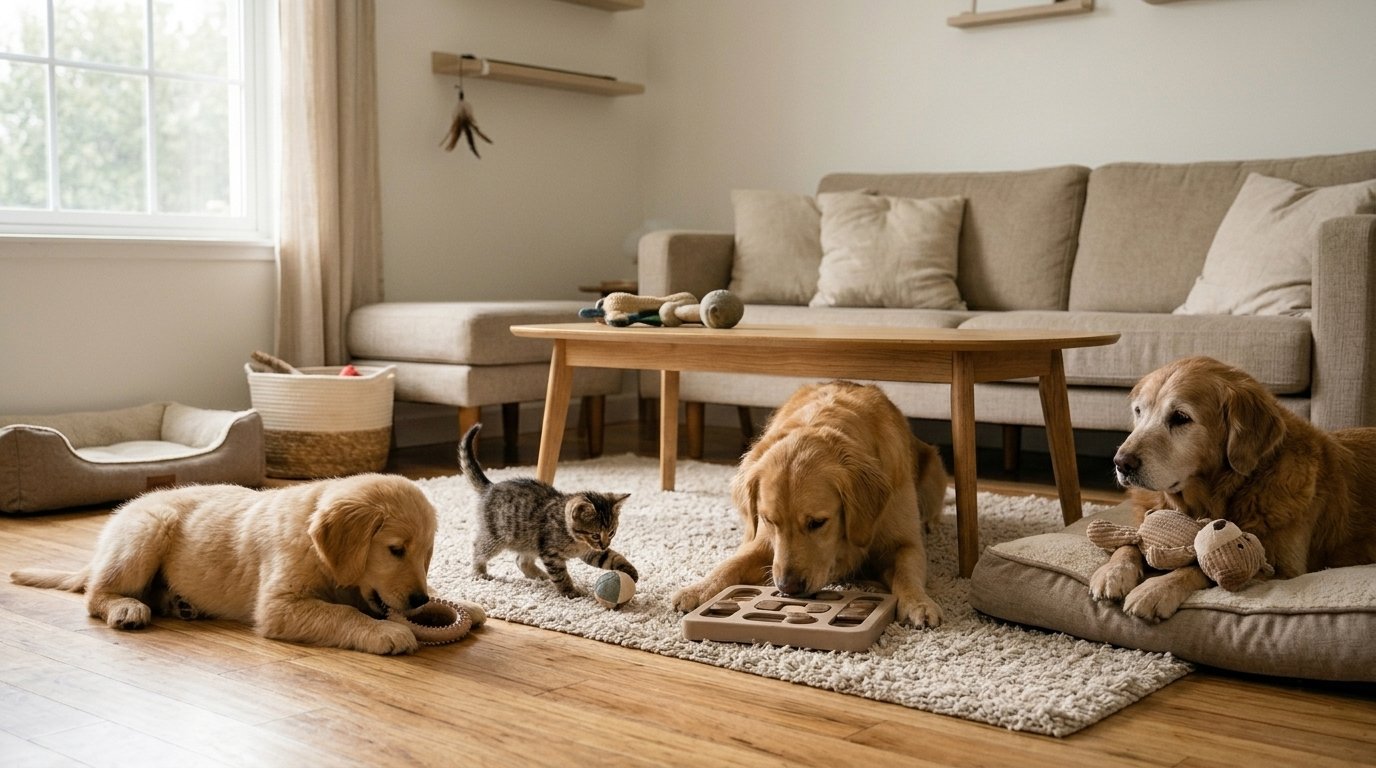
Choosing the right toys for your pet is an important part of keeping them happy, active, and entertained. Whether you have a playful puppy, a curious kitten, or another small companion, toys provide exercise, mental stimulation, and opportunities for bonding.
However, not every toy is suitable for every animal. Some toys may be too small, too hard, or made from materials that are not appropriate for your pet.
Advertisement – Continue Reading Below
Understanding how to choose safe toys for your pet can help you create a fun and comfortable playtime experience.
1. Choose Toys That Match Your Pet’s Size
One of the first things to consider when buying pet toys is size.
A toy that is too small may be accidentally swallowed, while an oversized toy can be difficult for your pet to carry or enjoy.
For dogs, choose toys that are large enough to prevent accidental swallowing but comfortable to hold.
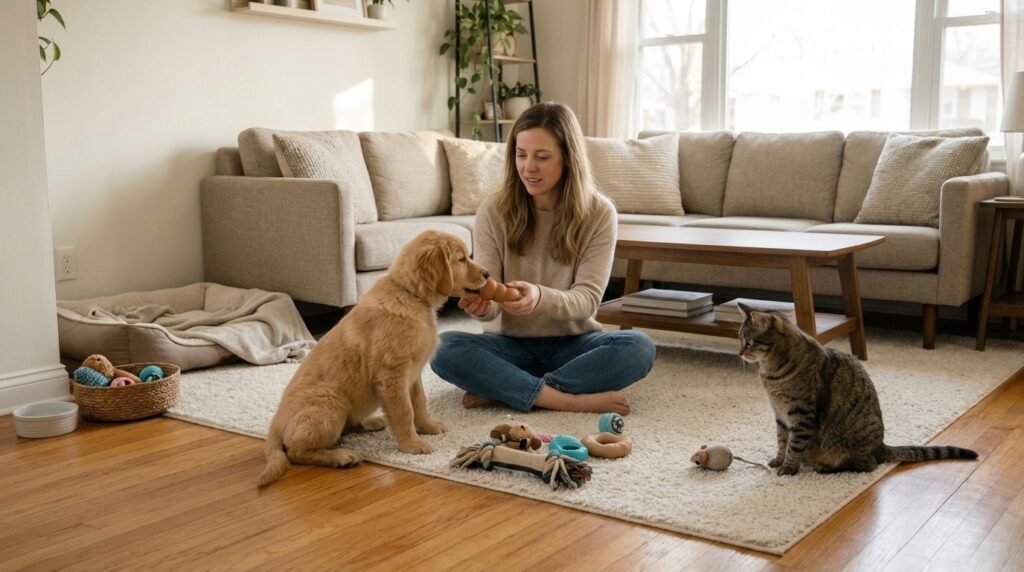
Cats often prefer lightweight toys they can chase, bat, or carry.
Always check the manufacturer’s size recommendations and consider your pet’s individual playing habits.
2. Look for Pet-Friendly Materials
The materials used in pet toys can affect their durability and suitability.
Choose toys made from materials intended for your pet’s species and style of play.
Natural rubber, sturdy fabric, and appropriately designed pet-safe plastics are common options.

Avoid toys with easily detachable decorations, loose beads, or small plastic pieces.
Also, remember that labels such as “natural” or “non-toxic” do not automatically guarantee that a toy is safe for every pet.
3. Avoid Toys With Small or Loose Parts
Pets often explore toys using their mouths, paws, and teeth.
Buttons, bells, ribbons, and other small attachments can become problematic if they come loose during play.

Before giving your pet a new toy, examine it carefully.
Check for weak stitching, removable pieces, and decorations that could easily detach.
For cats, string toys and feather wands can be entertaining, but they should be used under supervision and stored away afterward.
4. Consider Your Pet’s Age and Activity Level
Different life stages require different types of toys.
Young puppies may enjoy flexible teething toys designed for their developing mouths, while adult dogs may prefer interactive puzzles or durable fetch toys.
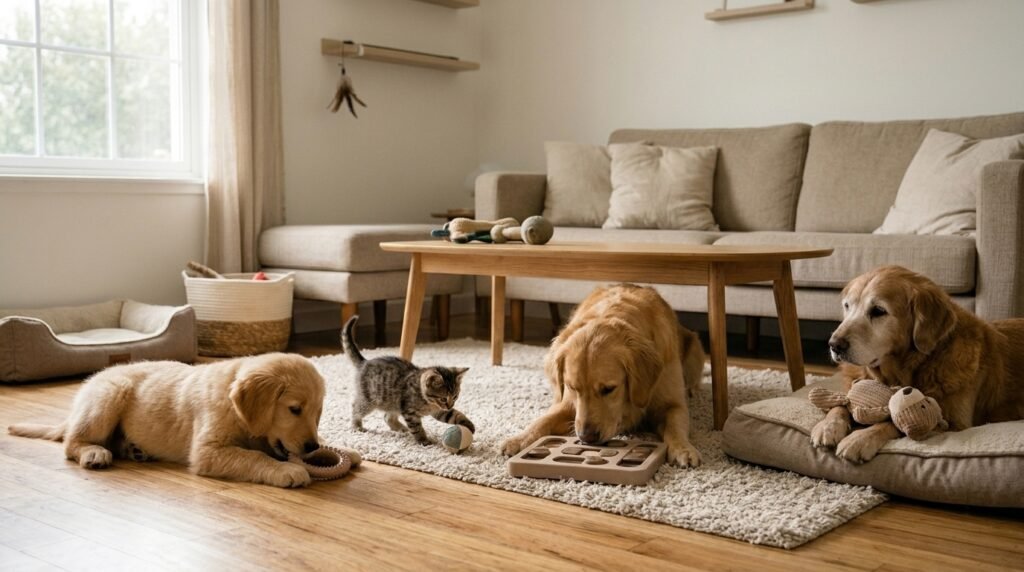
Senior pets often benefit from softer toys that are easier to carry and handle.
Kittens typically enjoy lightweight toys that encourage natural chasing and pouncing behaviors.
Selecting age-appropriate toys helps make playtime comfortable and enjoyable.
5. Choose Toys That Encourage Mental Stimulation
Physical exercise is important, but pets also need activities that keep their minds engaged.
Puzzle toys, treat-dispensing toys, and interactive games can provide enrichment while encouraging natural behaviors.
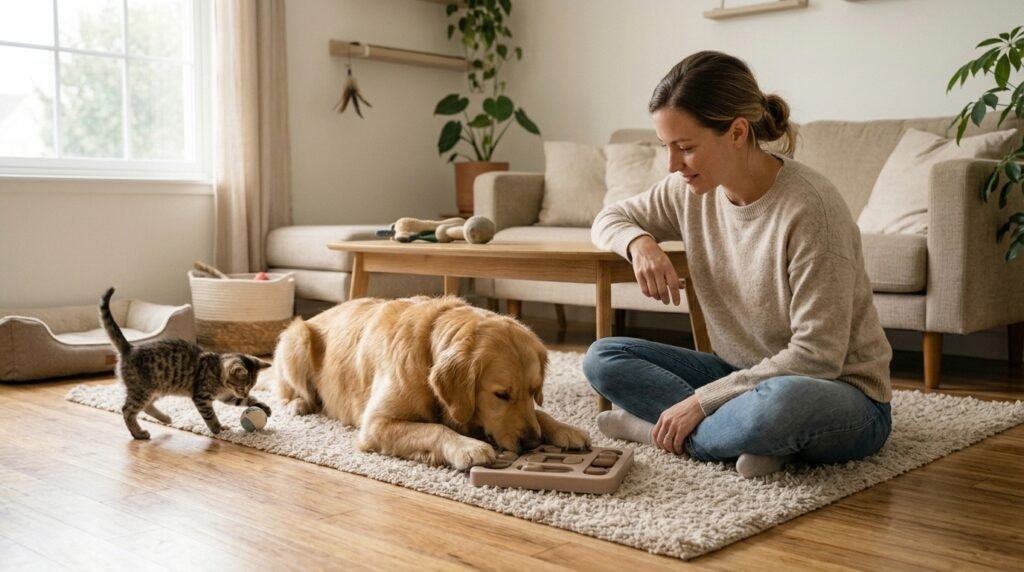
For dogs, food puzzles can turn snack time into an engaging activity.
For cats, interactive wand toys and rolling balls can encourage movement and exploration.
Introduce puzzle toys gradually and choose a difficulty level that suits your pet.
6. Check Toys Regularly for Wear and Tear
Even well-made pet toys can become damaged over time.
Regularly inspect toys for cracks, loose stuffing, frayed ropes, and broken pieces.

If a toy becomes damaged, remove it from your pet’s play area.
Pay particular attention to chew toys, especially if your dog enjoys chewing enthusiastically.
Replacing worn-out toys is a simple way to maintain a safer play environment.
7. Supervise Your Pet During Playtime
Supervision is one of the easiest ways to make playtime safer.
Observe how your pet interacts with a new toy before deciding whether it is suitable for independent play.
Some animals gently carry toys, while others chew, pull, or tear them apart.

Toys containing ropes, strings, feathers, or detachable parts generally require closer attention.
Even toys marketed for independent play should be checked regularly.
Final Thoughts
Learning how to choose safe toys for your pet helps you make thoughtful decisions about their daily activities.
By selecting the right size, checking materials, inspecting toys regularly, and supervising playtime, you can create an enjoyable environment for your companion.

Remember, the best pet toy is not necessarily the most expensive or colorful one. It is a toy that matches your pet’s needs, encourages healthy activity, and supports safe, enjoyable play.
With a little care and attention, playtime can become one of the happiest parts of your pet’s day.