Cross-Eyed Siamese Cats: Why It Happens

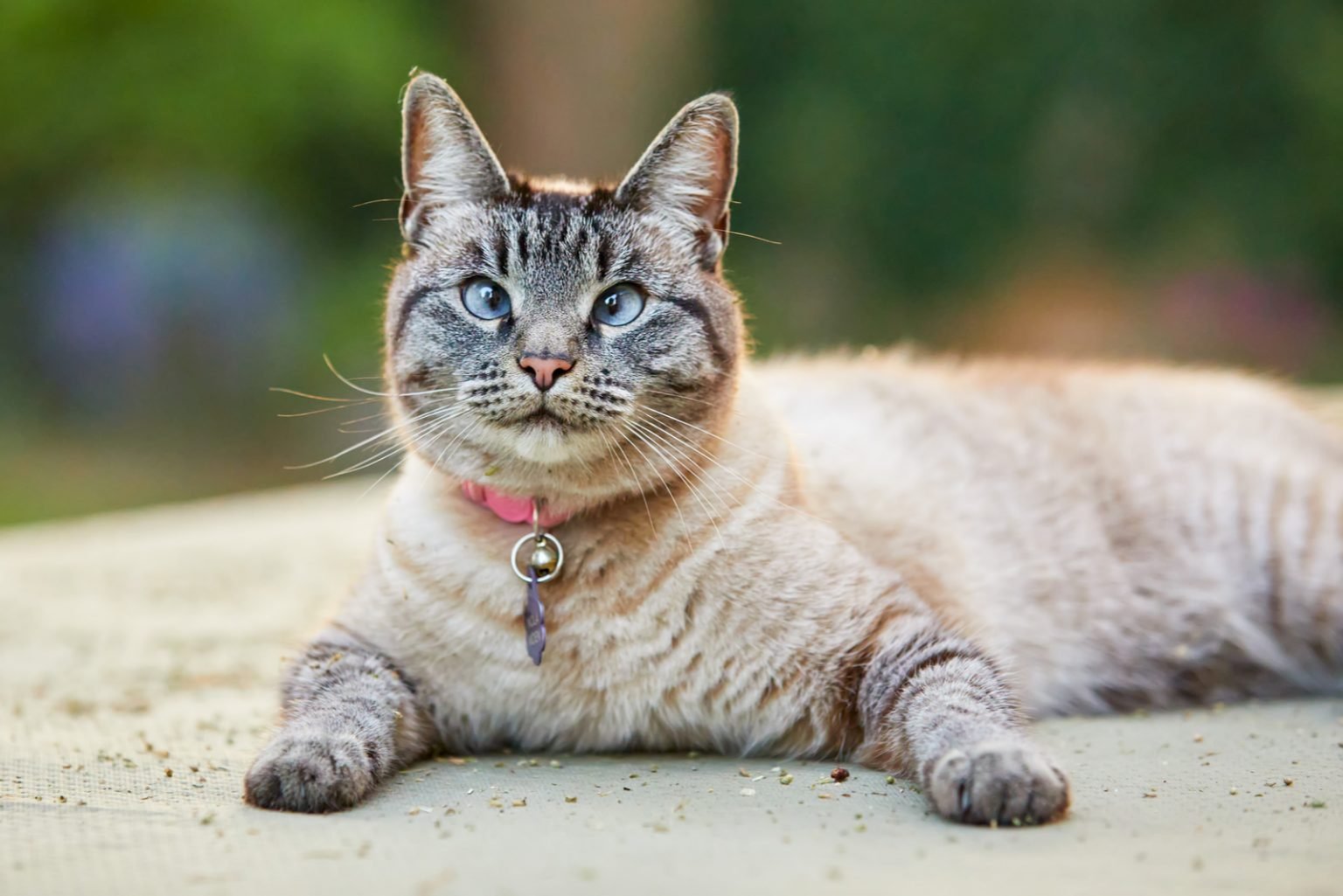
Siamese cats, affectionately called Meezers, are known for their elegance, intelligence, and affectionate personalities. These social cats often form strong bonds with their families.
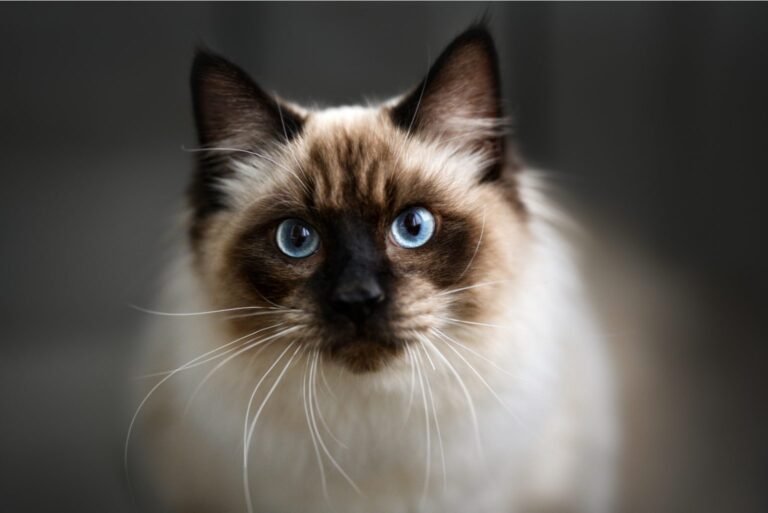
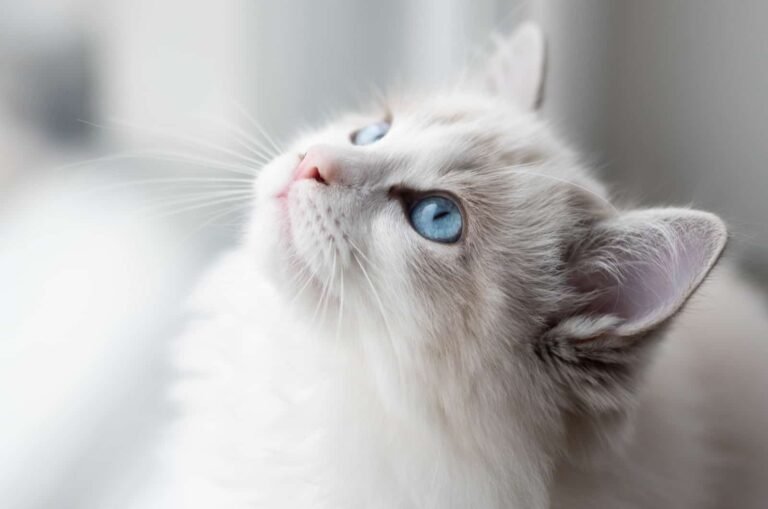
Their striking appearance makes them easy to recognize. With bright blue eyes, sleek coats, and darker markings on their faces, ears, paws, and tails, they stand out.
Advertisement – Continue Reading Below
However, a cross-eyed Siamese cat has another feature that may catch your attention: eyes that turn inward toward the nose.
More Than One Coat Color
Siamese cats have short coats with darker areas called color points. Their bodies are usually lighter, creating a clear contrast with these markings.
Common point colors include seal, chocolate, blue, and lilac. Depending on the breed registry, red, cream, tortie, and tabby patterns may fall under different breed names. Tabby points are also known as lynx points.
Do All Siamese Cats Have Crossed Eyes?
Not all Siamese cats have crossed eyes. However, the trait has long been associated with the breed.
Traditional Siamese cats from Thailand sometimes had crossed eyes and kinked tails. Still, these features were never present in every cat.
Over time, breeders selected against both traits. As a result, crossed eyes are less common in modern show lines, although they can still occur.
This raises an interesting question: why are some Siamese cats born with crossed eyes?
Why Do Some Siamese Cats Have Crossed Eyes?
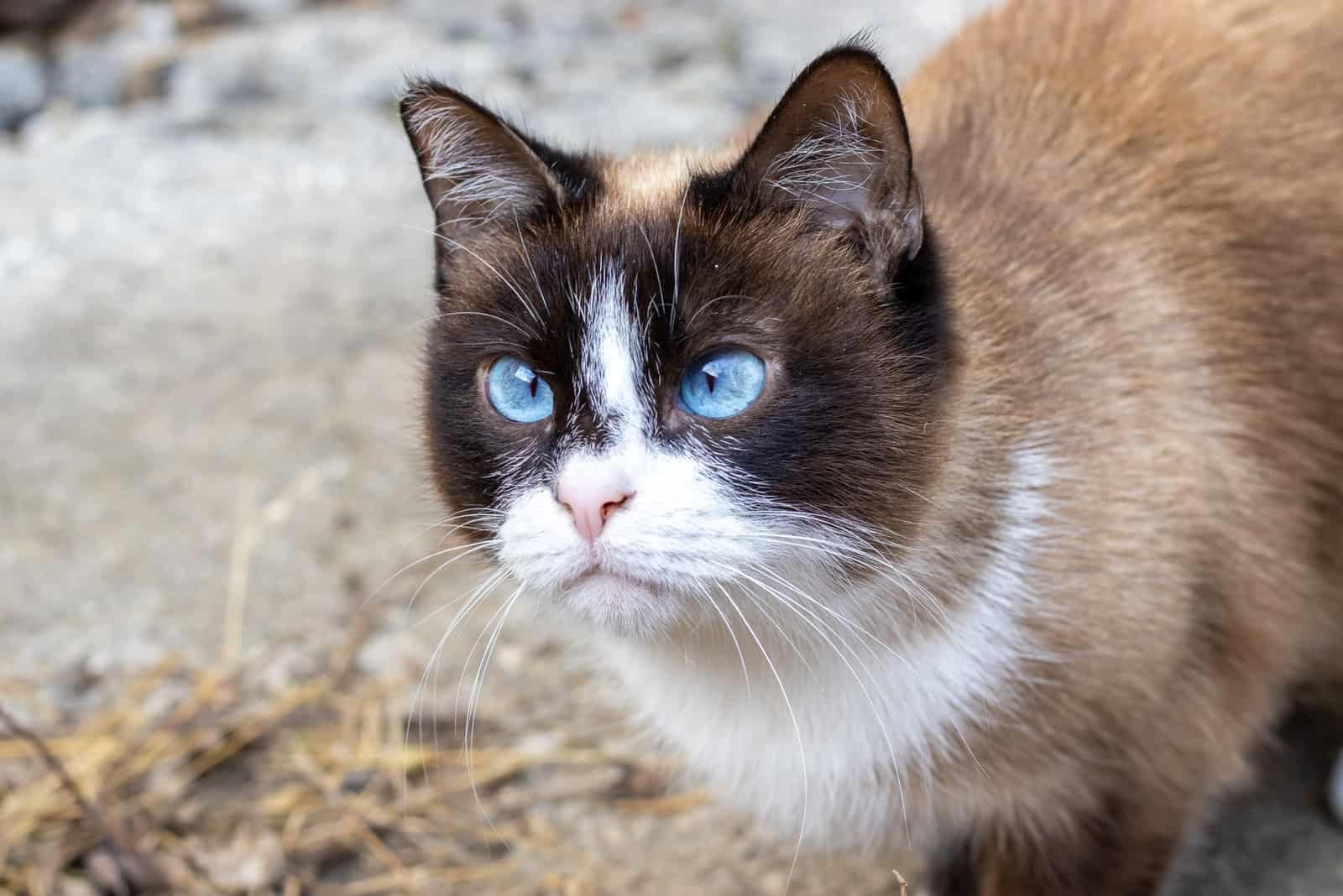
Breeders often select against crossed eyes, but the trait can still appear. The medical term for crossed or misaligned eyes is strabismus. In a cross-eyed Siamese cat, one or both eyes turn inward toward the nose.
What Causes Crossed Eyes?
The retina is the light-sensitive layer at the back of the eye. It receives light and sends visual signals to the brain through the optic nerve.
In some Siamese cats, the pathways carrying these signals develop differently. Some nerve fibers cross to the opposite side of the brain in an unusual pattern. This difference in visual wiring can contribute to the crossed-eye appearance. The retina itself does not move out of position.
How Coat Color Is Connected
Siamese cats carry a gene variant that affects melanin, the pigment responsible for coloring their fur, skin, and eyes. This variant causes temperature-sensitive partial albinism and is linked to differences in how their visual pathways develop.
However, Siamese cats are not simply black cats with an albino gene. Their underlying coat-color genes also influence the colors of their markings.
The temperature-sensitive variant allows more pigment to develop in cooler parts of the body. This explains why their ears, faces, paws, and tails are darker than their bodies.
Why Siamese Kittens Start Out Pale
Siamese kittens are usually born with white or cream coats because they develop in the warmth of their mother’s womb.
After birth, their cooler extremities gradually darken, revealing their color points. Their eyes remain blue rather than pink.
Also, a white coat alone does not mean a cat has albinism. Several different genetic factors can produce white fur.
Are Crossed Eyes In Siamese Cats A Reason For Concern?
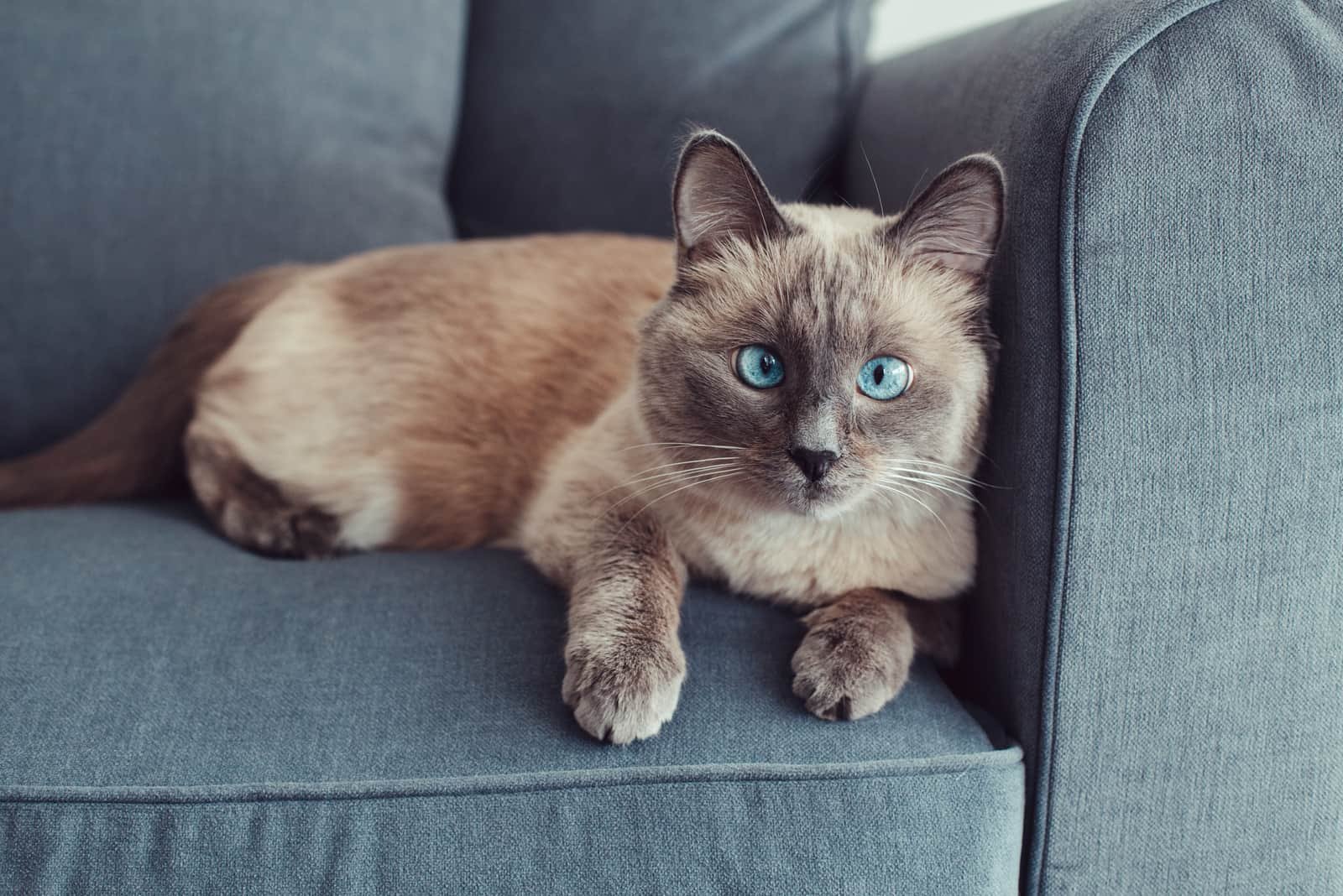
Seeing a cross-eyed Siamese cat may leave you wondering whether it can see clearly or feels uncomfortable.
Cats born with crossed eyes often adapt well and enjoy a good quality of life. Many play, explore, and move around their homes with confidence. The eye alignment itself is usually not painful.
However, some cats may have differences in depth perception or vision. How much this affects daily life varies from cat to cat.
In some cases, crossed eyes can also develop later in life. If your cat’s eyes suddenly become misaligned, contact a veterinarian promptly. A new change, especially with poor balance, unusual eye movements, or signs of pain, needs veterinary attention.are associated with poor depth perception and fixed peripheral vision.
A Siamese cat cross eyed sometimes must cross her eyes in order to see clearly.
This is just something that they do, and they don’t feel uncomfortable doing because it feels completely natural to them.
They are still our favorite little kitties, and there is no reason they can’t enjoy a happy life playing, climbing, meowing, and purring.
What If My Cat Isn’t Born With A Cross-Eyed Condition?
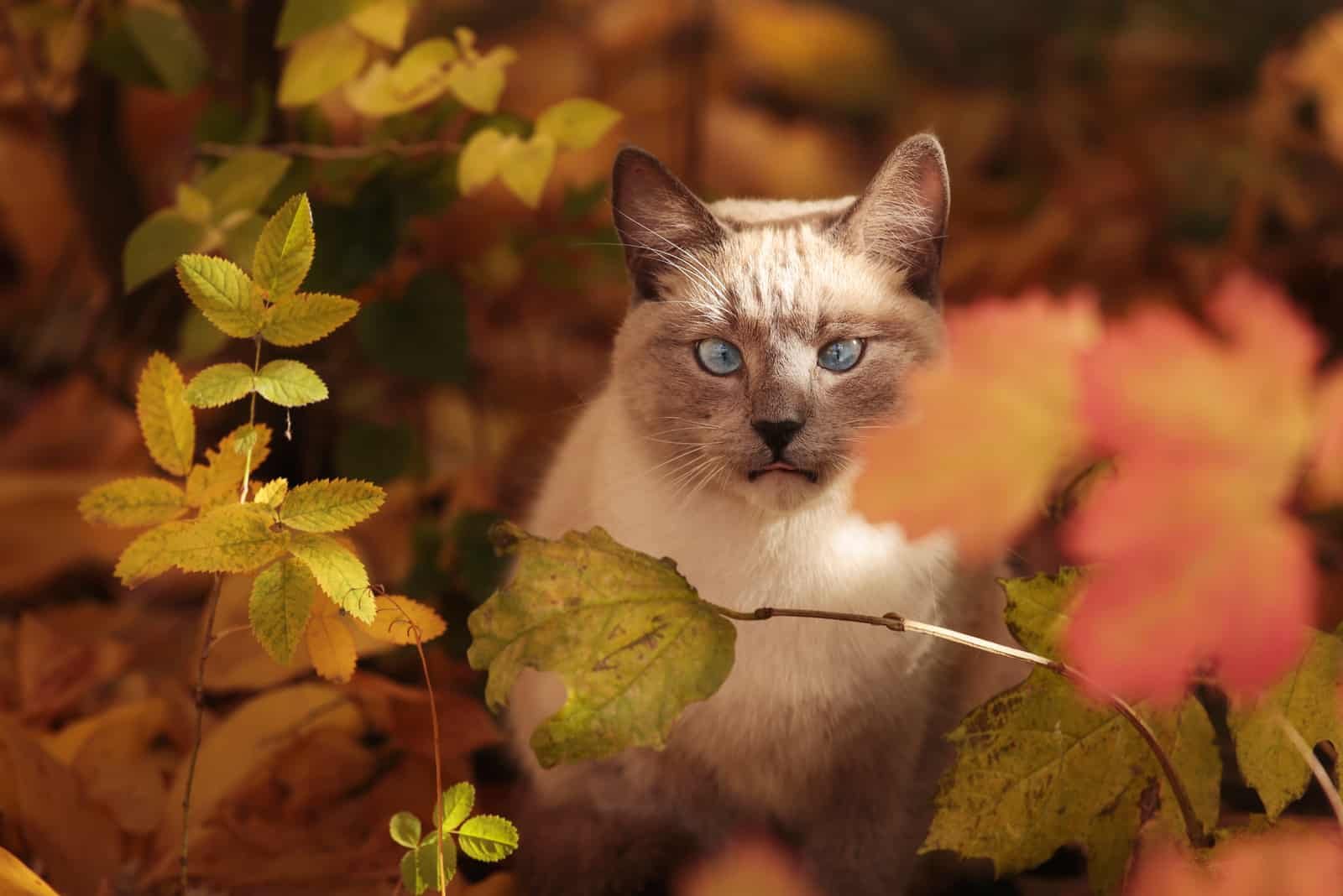
If your Siamese cat suddenly develops crossed eyes, contact your veterinarian promptly. You should also arrange an examination if an existing eye misalignment changes.
Share your cat’s medical history and explain when you first noticed the change. Mention any other symptoms, such as poor balance, head tilting, or changes in behavior.
The vet will examine your cat’s eyes and check its vision, reflexes, and balance. Depending on the findings, they may recommend further tests to investigate an eye problem, an inner ear condition, or a neurological cause.
Blood tests may help identify underlying illness. However, they are not always necessary, and routine blood work alone cannot rule out every cancer.
What Is Nystagmus?
Another eye condition that can occur in Siamese cats is nystagmus. This causes repeated, involuntary eye movements, often from side to side.
Some Siamese cats have these movements from an early age. However, new or worsening movements need veterinary attention, especially if your cat also seems dizzy or struggles to walk.
History of the Siamese Cat
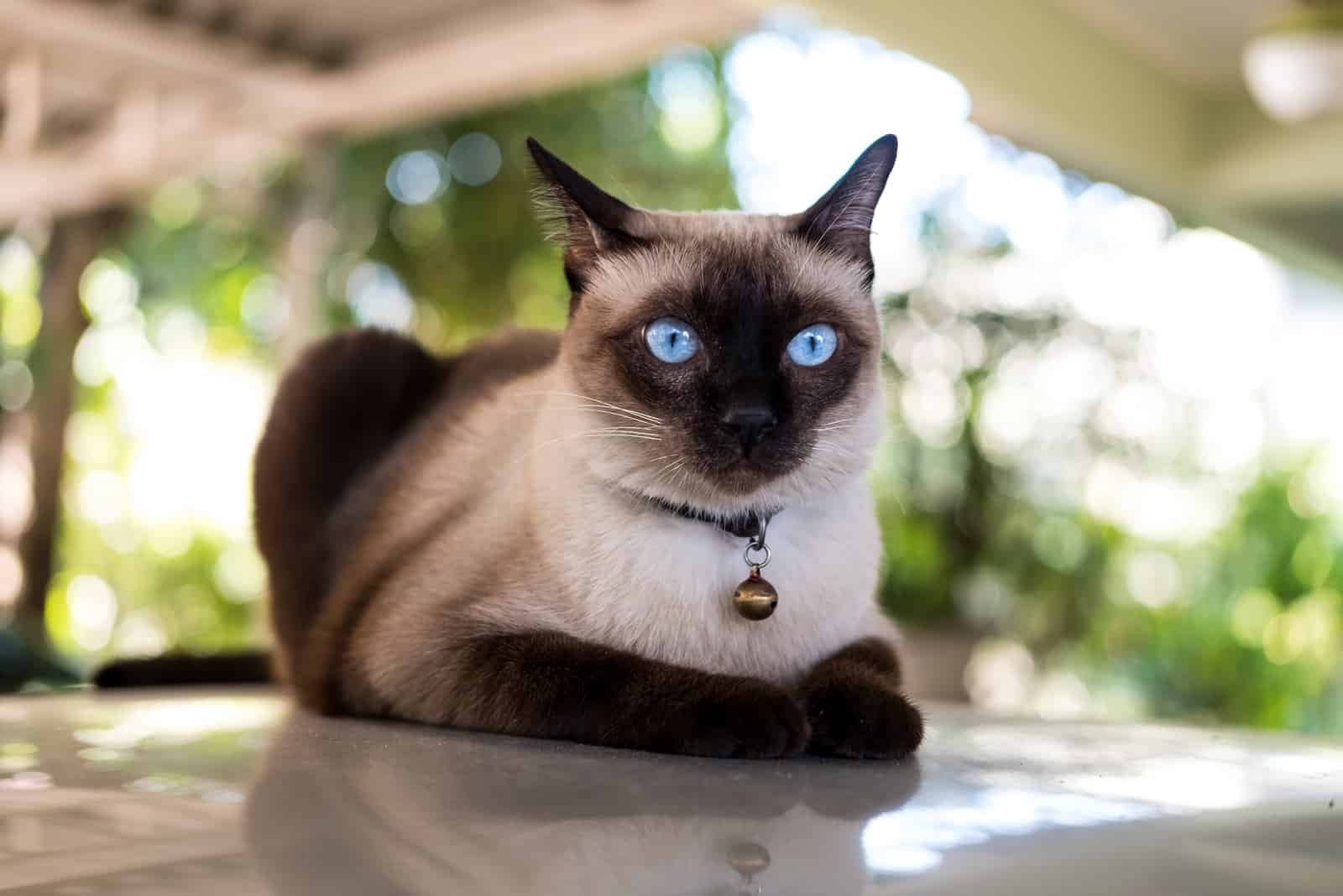
Siamese cats originated in Thailand, formerly known as Siam. Although their exact beginnings are unclear, they have a long history in their homeland.
Descriptions of cats resembling the Siamese appear in the Tamra Maew, a collection of Thai cat poems. These writings are associated with the Ayutthaya period, which lasted from 1351 to 1767.
Their pale coats, dark points, and blue eyes helped make Siamese cats recognizable. Over time, their striking appearance and lively personalities won admirers around the world.
Stories often connect these cats with royalty and Buddhist temples. Some describe them as treasured companions or guardians of sacred places. However, claims that stealing a Siamese cat carried a death sentence are difficult to verify and should be treated as folklore.
These royal and spiritual associations also inspired legends about their crossed eyes and kinked tails.
The Legend of the Siamese Cat
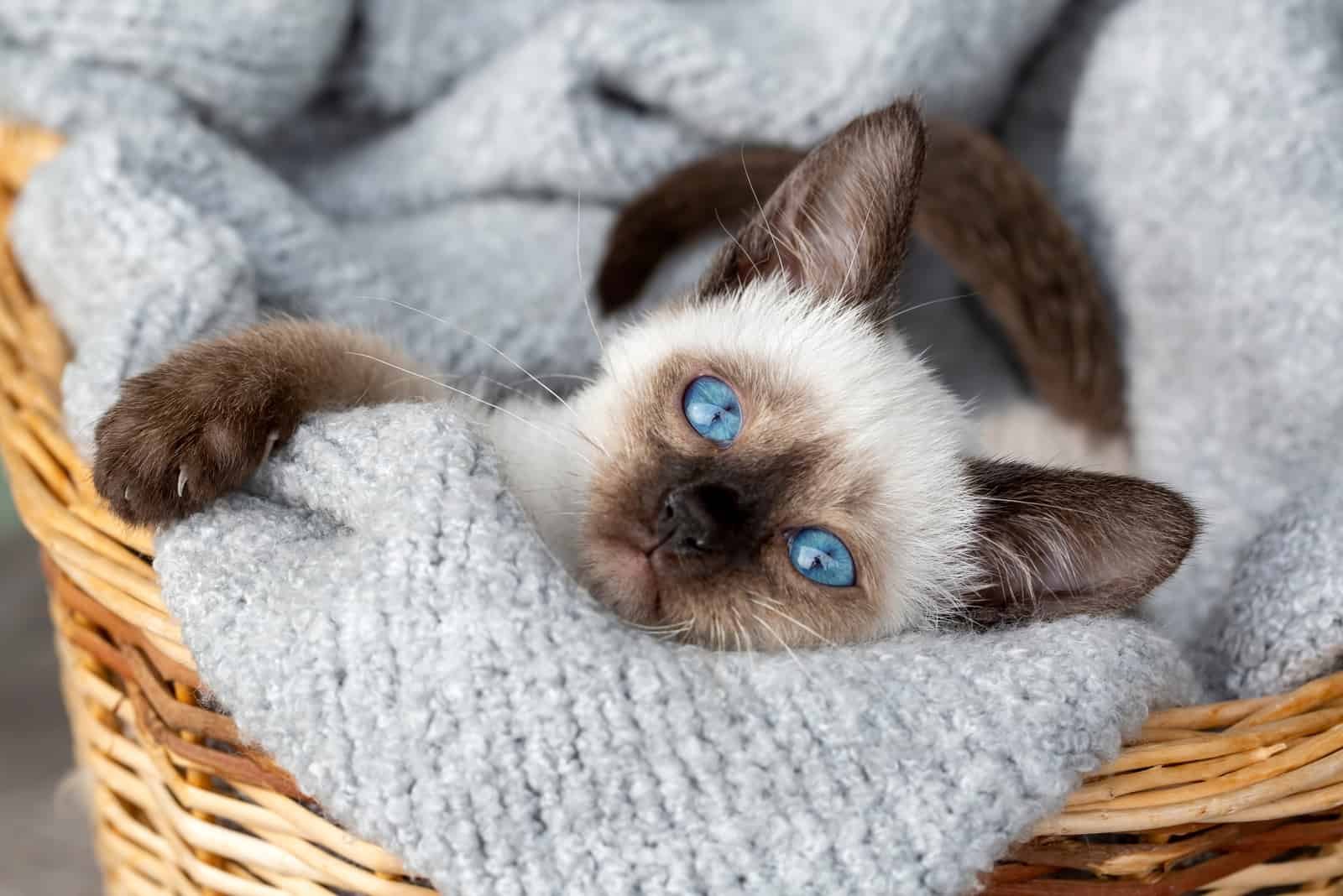
Many legends surround Siamese cats, especially their crossed eyes and kinked tails. These stories are folklore, rather than scientific explanations, but they add charm to the breed’s history.
The Royal Goblet
One legend tells of Siamese cats assigned to guard a royal goblet. They watched it so closely that their eyes became permanently crossed.
Meanwhile, they wrapped their tails around the goblet to keep it safe. According to the story, this left their tails with a lasting kink.
The Temple Guardians
Another tale describes Siamese cats protecting sacred temples from thieves who wanted to steal precious jewels.
The cats bravely defended the treasure and earned the monks’ gratitude. As a reward, the story says, they received brilliant blue eyes—jewels of their own.
Final Thoughts
A cross-eyed Siamese cat can be just as affectionate, playful, and engaging as any other Siamese. Its eye alignment is only one small part of its appearance and personality.
Gentle handling, early socialization, and daily interaction can help a Siamese kitten grow into a confident companion. However, every cat has its own temperament and needs.
Cats born with crossed eyes often adapt well. Still, any sudden change in eye position or movement needs prompt veterinary attention.
Whether their eyes are crossed or straight, Siamese cats deserve a caring home where their comfort, health, and personality come first.