How to Prepare Your Home for a Newly Adopted Pet


Bringing a newly adopted pet into your home is an exciting experience. Whether you’re welcoming a playful puppy, a curious kitten, or an older companion, preparing your living space helps your new pet feel safe, comfortable, and loved.
A new environment can be overwhelming for animals, especially those coming from shelters or rescue organizations. With a little planning, you can create a welcoming home that makes the transition easier for everyone.
Advertisement – Continue Reading Below
Here are some simple and practical tips on how to prepare your home for a newly adopted pet.
1. Create a Comfortable Space for Your New Pet
Before bringing your pet home, choose a quiet area where they can relax and adjust to their surroundings.
Set up a comfortable bed, clean water, and a few appropriate toys. For cats, include a litter box and scratching post. Dogs may benefit from a cozy resting area or a properly introduced crate.
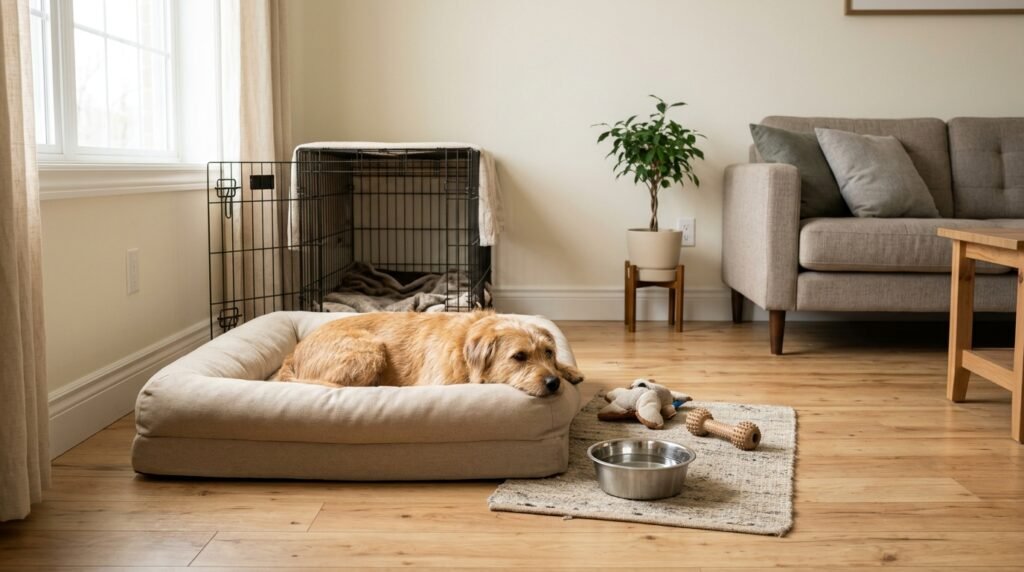
Avoid placing your pet’s resting space near loud appliances or busy entrances.
Having a dedicated area gives your new companion a sense of security while exploring an unfamiliar environment.
2. Pet-Proof Your Home for Safety
Pet-proofing is one of the most important steps when preparing your home for an adopted animal.
Curious pets may explore cabinets, chew household objects, or squeeze into small spaces.
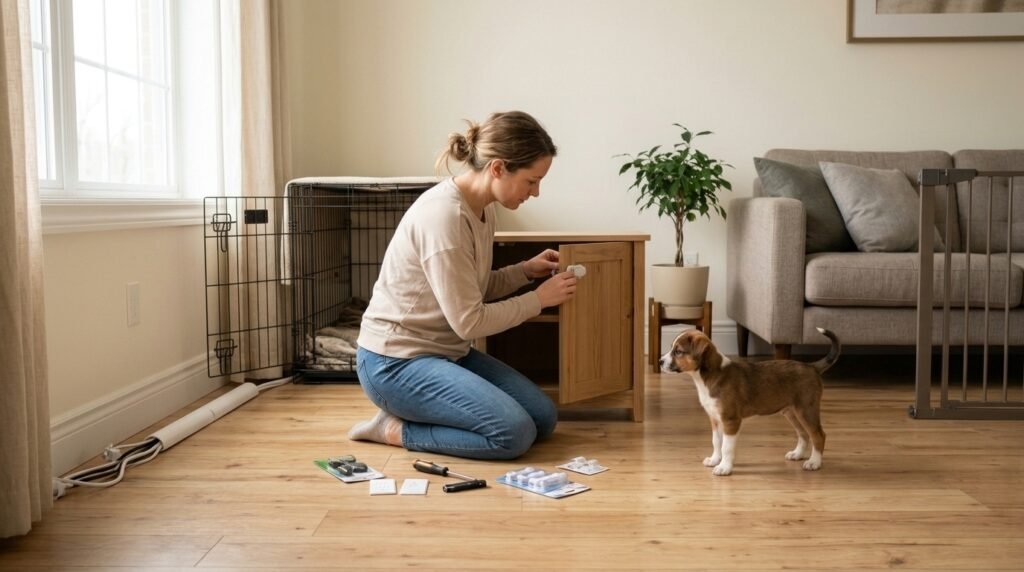
To create a safer environment:
- Keep cleaning products and medications in secure cabinets.
- Remove toxic plants from accessible areas.
- Hide or protect electrical cords.
- Store small objects that could be swallowed.
- Secure windows, balconies, and outdoor gates.
- Keep human foods that are unsafe for pets out of reach.
Walk through your home from your pet’s perspective to identify possible hazards.
3. Gather Essential Pet Supplies
Having the right supplies ready before adoption makes the first few days much easier.
Your pet’s needs will depend on their species, age, size, and personality.
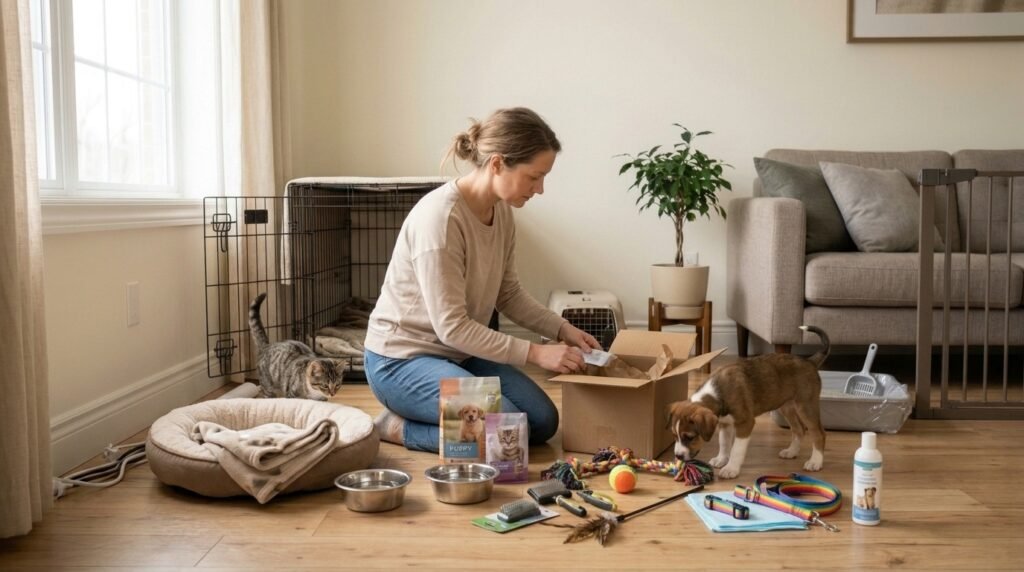
Basic pet supplies include:
- Food and water bowls.
- Age-appropriate pet food.
- A comfortable bed or blanket.
- Safe toys for entertainment.
- Grooming supplies.
- A collar, identification tag, and leash for dogs.
- A litter box and litter for cats.
- A secure carrier for transportation.
Ask the shelter what food your pet currently eats. Maintaining the same diet initially can help avoid unnecessary digestive discomfort.
4. Set Up a Feeding Area
Choose a clean, quiet location for your pet’s food and water bowls.
Avoid placing feeding bowls near litter boxes or areas with heavy foot traffic.
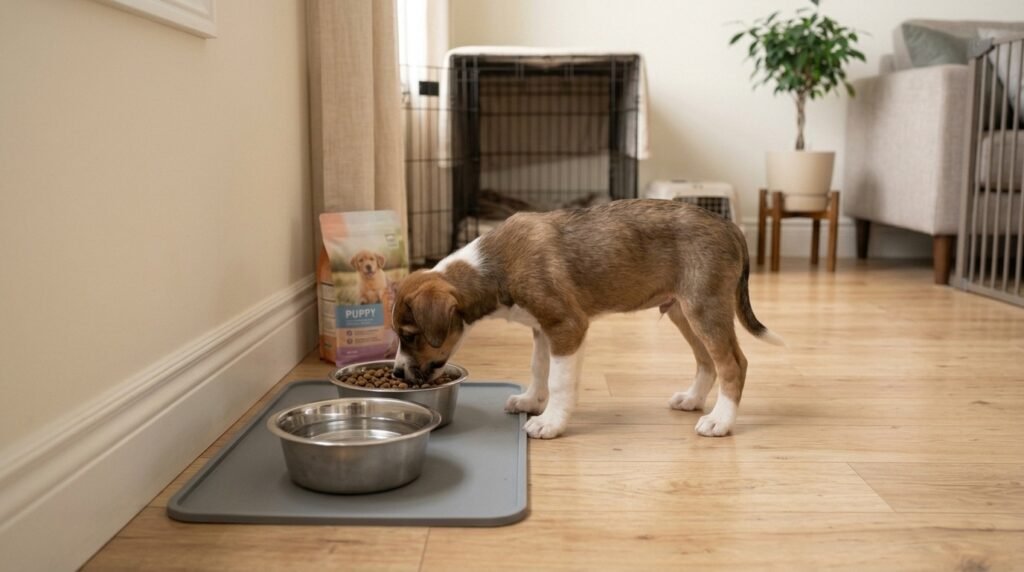
Provide fresh drinking water throughout the day and establish regular feeding times.
If you plan to change your pet’s food, introduce the new diet gradually according to veterinary guidance.
A consistent feeding routine helps your pet become familiar with their new surroundings.
5. Prepare a Safe Sleeping Area
Your newly adopted pet needs a peaceful place to rest.
Choose a sleeping area away from excessive noise, cold drafts, and frequent disturbances.

Provide soft bedding suitable for your pet’s size and needs.
Some animals may prefer sleeping in enclosed spaces, while others feel more comfortable in open areas.
Allow your pet to choose where they feel secure rather than forcing them into a particular sleeping arrangement.
6. Introduce Family Members Slowly
Meeting several new people at once can be stressful for an adopted pet.
Introduce family members gradually and encourage everyone to interact calmly.

Teach children to respect the animal’s personal space and avoid pulling tails, grabbing ears, or disturbing them while eating or sleeping.
If you already have pets, introduce them carefully using a gradual process appropriate for their species and temperament.
Supervise interactions until you’re confident everyone is comfortable together.
7. Establish a Daily Routine
Animals often feel more secure when their daily activities are predictable.
Create a routine that includes regular feeding, exercise, bathroom breaks, playtime, and rest.

For dogs, establish consistent walking and outdoor bathroom schedules.
For cats, provide regular interactive play sessions and easy access to clean litter boxes.
Avoid overwhelming your new companion with too many activities during the first few days.
A predictable routine helps build confidence and trust.
Final Thoughts
Preparing your home for a newly adopted pet is about more than purchasing food, toys, and bedding. It’s about creating a safe, welcoming environment where your new companion can feel secure.

By pet-proofing your living space, gathering essential supplies, establishing routines, and providing patient care, you can help your adopted pet settle into their new home.
A little preparation today can make a lasting difference in your pet’s comfort, happiness, and well-being.