What Do Fish Eat? A Guide to Different Fish Diets

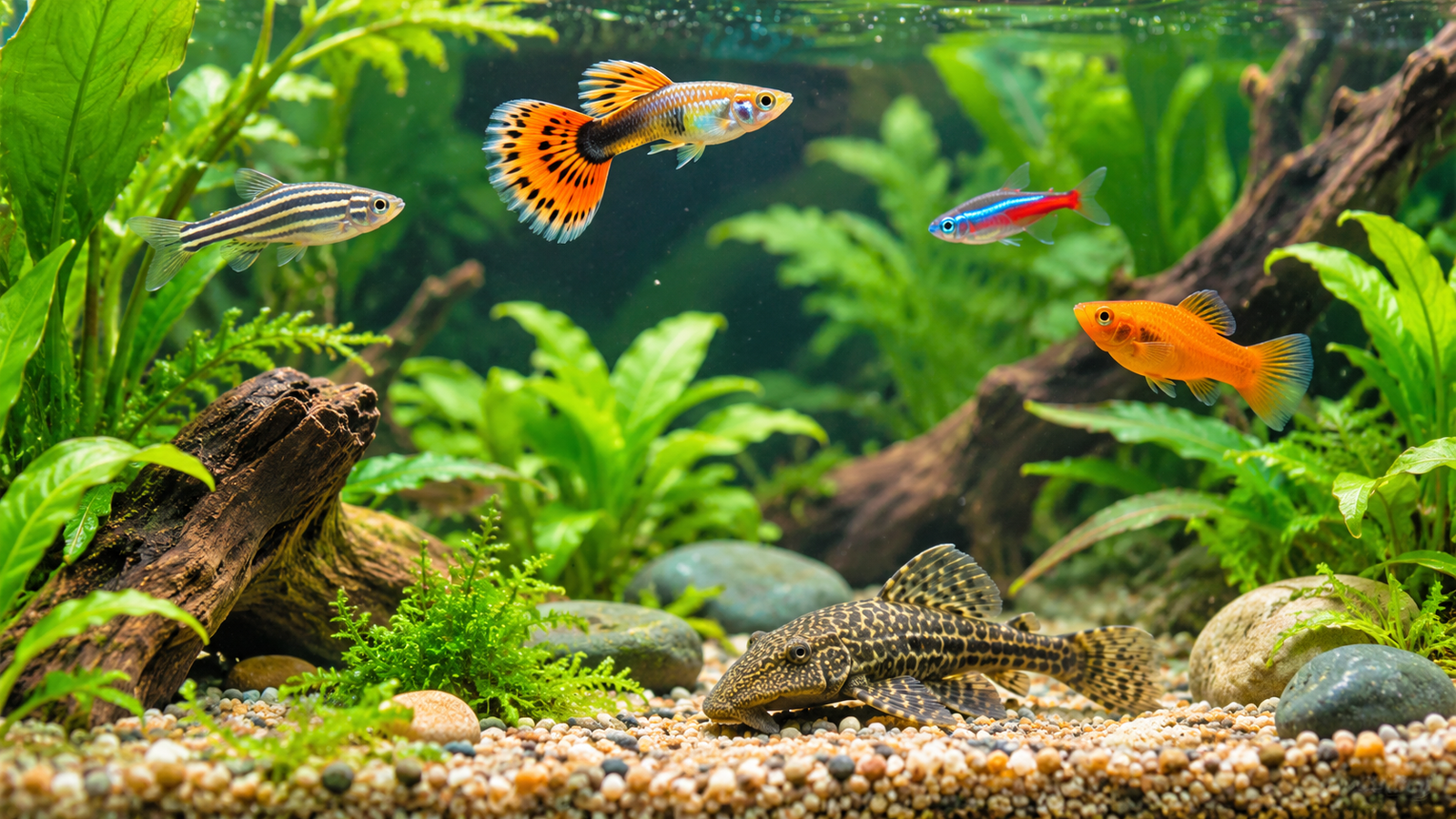
Have you ever wondered what fish eat in their natural habitats? From tiny tropical fish to large ocean species, fish have different feeding habits depending on where they live and what their bodies need.
Some fish enjoy eating algae and aquatic plants, while others prefer insects, worms, shrimp, and smaller fish. Many species eat a combination of plant-based and animal-based foods.
Advertisement – Continue Reading Below
Understanding what fish eat is important, especially if you keep fish in an aquarium or want to learn more about aquatic life.
In this guide, we’ll explore the different types of fish diets, what freshwater and saltwater fish eat, and how to provide proper nutrition for pet fish.
What Do Fish Eat?
Fish eat a variety of foods, including algae, plankton, aquatic plants, insects, worms, small crustaceans, and other fish. Their diet depends on their species, size, habitat, and natural feeding behavior.
Some fish are herbivores, meaning they mainly eat plants. Others are carnivores that consume animal-based foods. Many fish are omnivores and eat both plants and animals.
For example, goldfish eat plant material and small aquatic organisms, while betta fish primarily consume insects and other tiny invertebrates.
Fish living in the wild find food naturally in their environment. Aquarium fish, however, depend on their owners for balanced meals.
Different Types of Fish Diets
Fish are generally classified into three main groups based on their eating habits.
1. Herbivorous Fish
Herbivorous fish mainly consume algae, aquatic vegetation, and other plant-based foods.
These fish help maintain balance in aquatic ecosystems by grazing on plant material.
Common foods include:
- Algae
- Seaweed
- Aquatic plants
- Spirulina-based foods
- Suitable vegetables such as zucchini
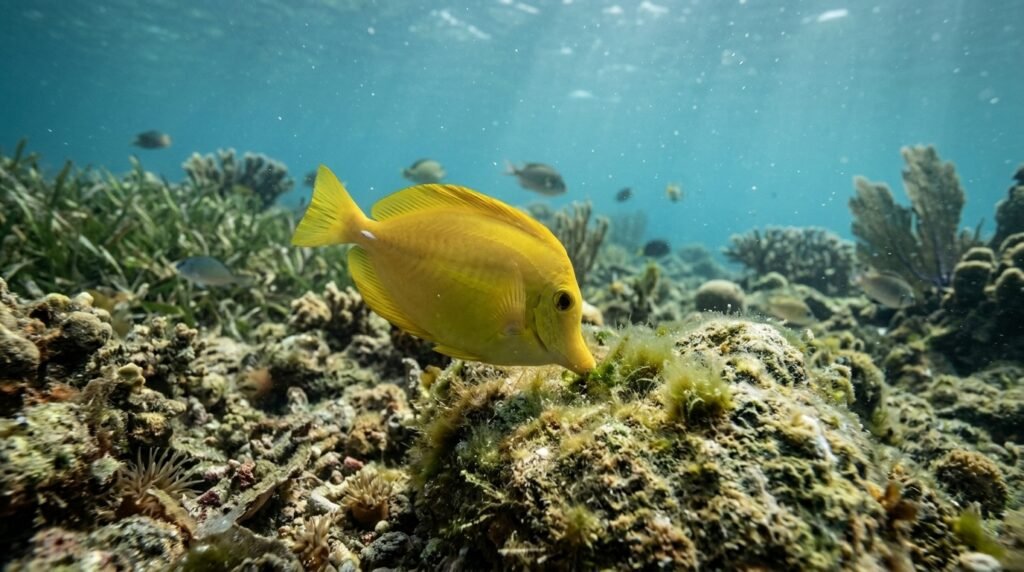
Examples include certain surgeonfish, rabbitfish, and plant-eating pleco species.
In aquariums, herbivorous fish often benefit from algae wafers and specially formulated vegetable-based foods.
2. Carnivorous Fish
Carnivorous fish primarily eat other animals. Depending on their size and species, they may consume insects, worms, shrimp, and smaller fish.
Common foods include:
- Small fish
- Insect larvae
- Brine shrimp
- Bloodworms
- Aquatic worms
- Small crustaceans

Betta fish, lionfish, and many predatory cichlids are examples of carnivorous fish.
These species usually require protein-rich foods that match their natural nutritional needs.
3. Omnivorous Fish
Omnivorous fish eat both plant-based and animal-based foods.
Their flexible diets allow them to consume different food sources depending on availability.

Common foods include algae, aquatic plants, insects, worms, and small crustaceans.
Goldfish, guppies, mollies, and many tropical community fish are omnivores.
A varied diet containing appropriate plant material and protein helps support their growth and overall health.
What Do Freshwater Fish Eat?
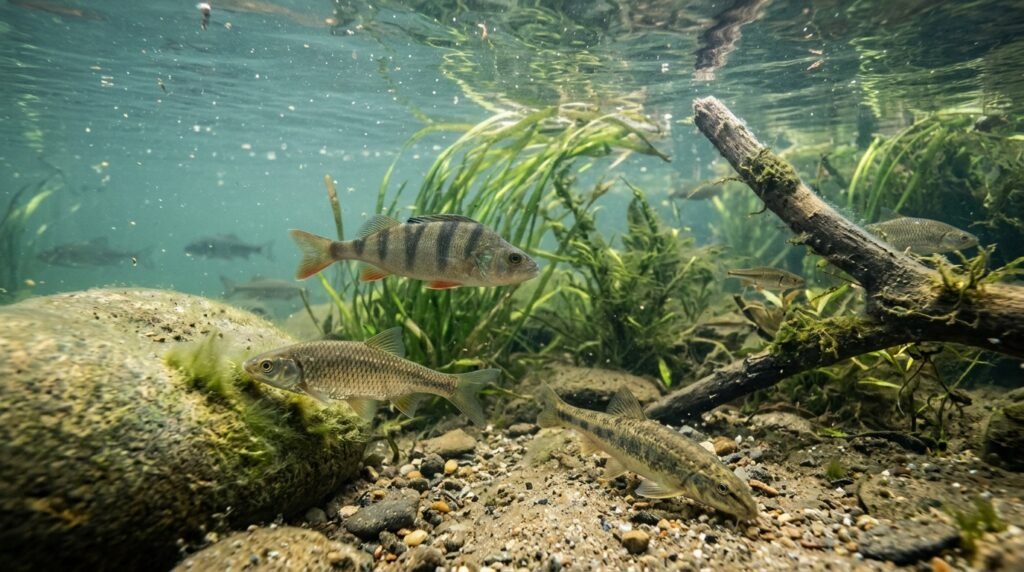
Freshwater fish live in rivers, lakes, ponds, and streams. Their diets depend on the food naturally available in these environments.
Many freshwater fish eat aquatic insects, worms, algae, plankton, and small crustaceans.
Some larger species also consume smaller fish.

For example, trout commonly feed on insects and small aquatic animals, while carp eat a combination of plant material and invertebrates.
Freshwater fish may search for food near the surface, among aquatic plants, or along the bottom of the water.
What Do Saltwater Fish Eat?
Saltwater fish live in oceans and seas, where a wide variety of food sources are available.
Their diets may include plankton, marine algae, shrimp, small fish, mollusks, and other marine organisms.
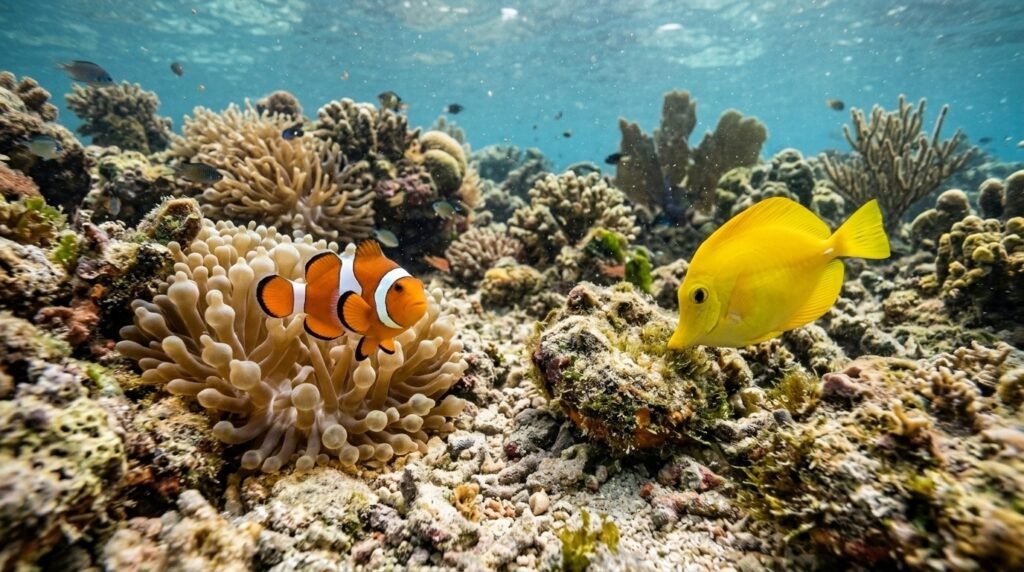
Clownfish, for example, consume zooplankton and algae. Many surgeonfish graze on marine algae, while lionfish feed on smaller fish and crustaceans.
Because marine species have different nutritional requirements, saltwater aquarium owners should choose foods designed for their particular fish.
What Do Aquarium Fish Eat?
Aquarium fish need nutritious food that supports their natural dietary requirements.
Commercial fish foods are available in several forms, making it easier to feed different species.
Fish flakes: A popular option for many small tropical fish. They are available in formulas for omnivorous, herbivorous, and carnivorous species.
Fish pellets: Available in floating and sinking varieties, pellets provide convenient nutrition for many aquarium fish.
Algae wafers: Suitable for certain algae-grazing and bottom-dwelling fish.
Frozen foods: Brine shrimp, bloodworms, and other species-appropriate frozen foods can add variety.
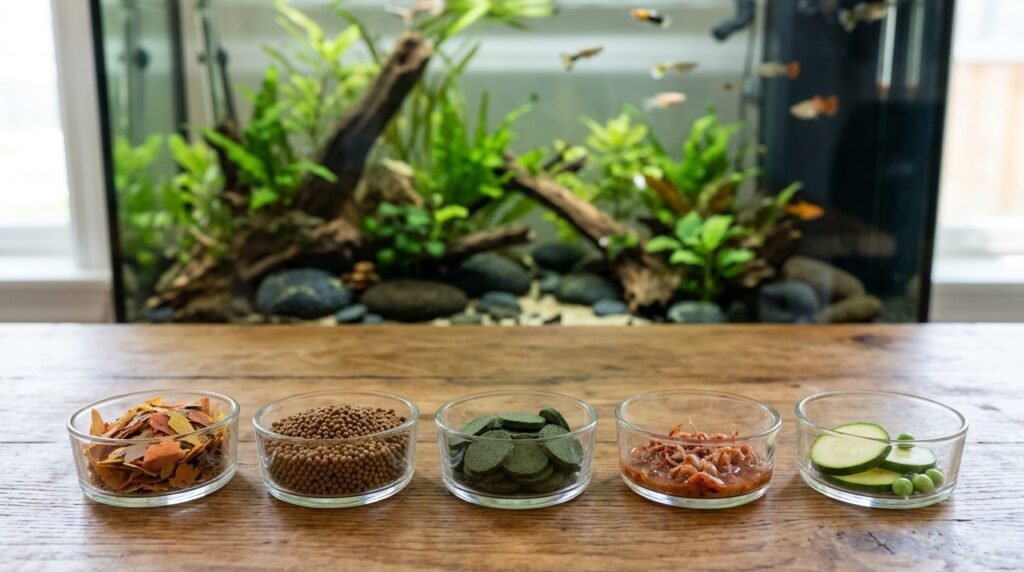
Vegetables: Some herbivorous and omnivorous fish can enjoy small portions of zucchini, spinach, or shelled peas.
The best choice depends on the fish species rather than simply selecting one food for the entire aquarium.
What Do Different Fish Species Eat?
Here is a quick comparison of common aquarium fish and their diets.
| Fish Species | Common Foods | Diet Type |
|---|---|---|
| Goldfish | Pellets, plant matter, small invertebrates | Omnivore |
| Betta fish | Betta pellets, insect larvae, brine shrimp | Carnivore |
| Guppies | Flakes, algae, small invertebrates | Omnivore |
| Mollies | Algae, vegetable-based flakes, small invertebrates | Omnivore |
| Angelfish | Pellets, flakes, small invertebrates | Omnivore |
| Clownfish | Marine pellets, zooplankton, algae | Omnivore |
| Many plecos | Algae wafers, vegetables, specialized foods | Varies by species |
Always check the nutritional requirements of your particular species before choosing food.
What Do Baby Fish Eat?
Baby fish, also called fry, need small, nutritious foods to support their rapid growth.
Their diets vary depending on their species and age.

Some fry eat microscopic organisms called infusoria, while others can consume newly hatched brine shrimp or specially formulated fry food.
Certain baby fish can also eat finely crushed fish flakes.
Because young fish are developing quickly, they often require more frequent feeding than adults.
How Often Should You Feed Fish?
Most adult aquarium fish can be fed once or twice daily, although feeding schedules vary by species.
Young fish may require smaller, more frequent meals, while some predatory fish naturally eat less often.
For many community aquarium fish, a useful starting point is to offer a small amount of food they can finish within a couple of minutes.

Avoid adding excessive food because leftovers can break down and affect water quality.
Observing your fish during feeding helps you determine whether their portions are appropriate.
Can Fish Eat Vegetables?
Yes, some fish can eat vegetables as part of a balanced diet.
Herbivorous and omnivorous fish may enjoy small portions of suitable vegetables, including zucchini, spinach, and shelled peas.
Vegetables should be washed, prepared appropriately, and offered without salt, oil, or seasoning.

Remove uneaten pieces before they begin to spoil.
However, vegetables are not suitable as the primary food for every fish species. Carnivorous fish generally require animal-based nutrition.
Do Fish Eat Algae?
Many fish naturally eat algae, especially species that graze on underwater surfaces.
Some plecos, otocinclus catfish, mollies, and surgeonfish consume algae as part of their diets.
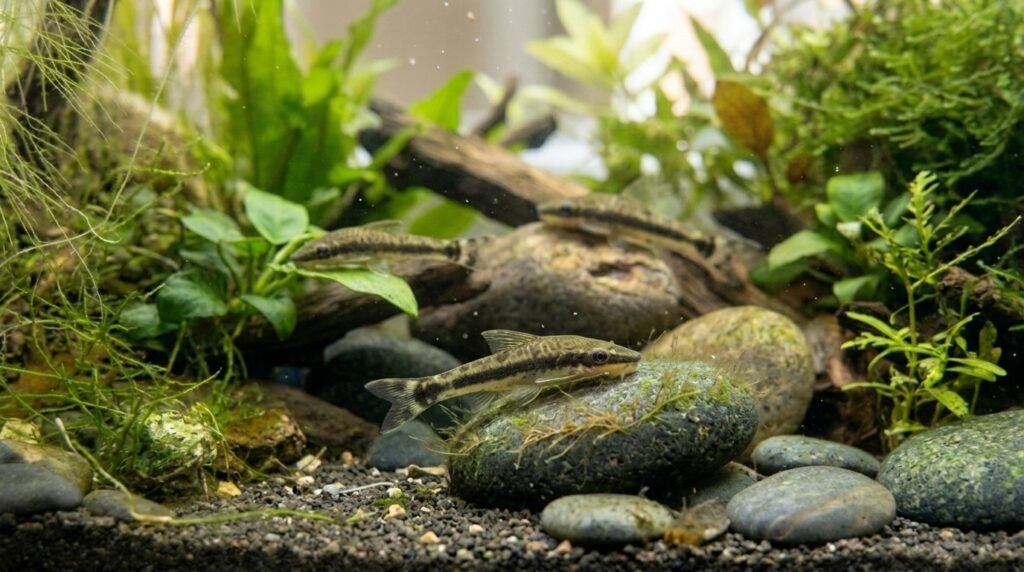
Algae can provide useful nutrients, but it may not supply everything these fish need.
Even fish known as algae eaters often require additional species-appropriate foods to maintain balanced nutrition.
Do Fish Eat Other Fish?
Yes, some fish naturally feed on smaller fish.
Predatory species hunt other fish as part of their normal feeding behavior.
Largemouth bass, lionfish, and certain large cichlids are examples of fish that may consume smaller fish.

Even some peaceful aquarium species may eat tiny fry when given the opportunity.
For this reason, choosing compatible fish species and appropriate tank mates is important.
Tips for Keeping Fish Healthy Through Proper Feeding
Providing a balanced diet is one of the simplest ways to support healthy aquarium fish.
- Choose suitable food: Select products designed for your fish species and dietary requirements.
- Feed appropriate portions: Avoid adding more food than your fish need.
- Offer dietary variety: Use suitable supplementary foods alongside a nutritionally complete staple diet.
- Maintain clean water: Remove leftover food and monitor aquarium water quality.
- Observe your fish: Watch their feeding behavior, appetite, and general activity.
- Adjust feeding schedules: Consider your fish’s age, size, and natural feeding habits.

Good nutrition, combined with proper aquarium maintenance, helps create a healthy environment for fish.