How Much Food Should You Give Your Pet Every Day?

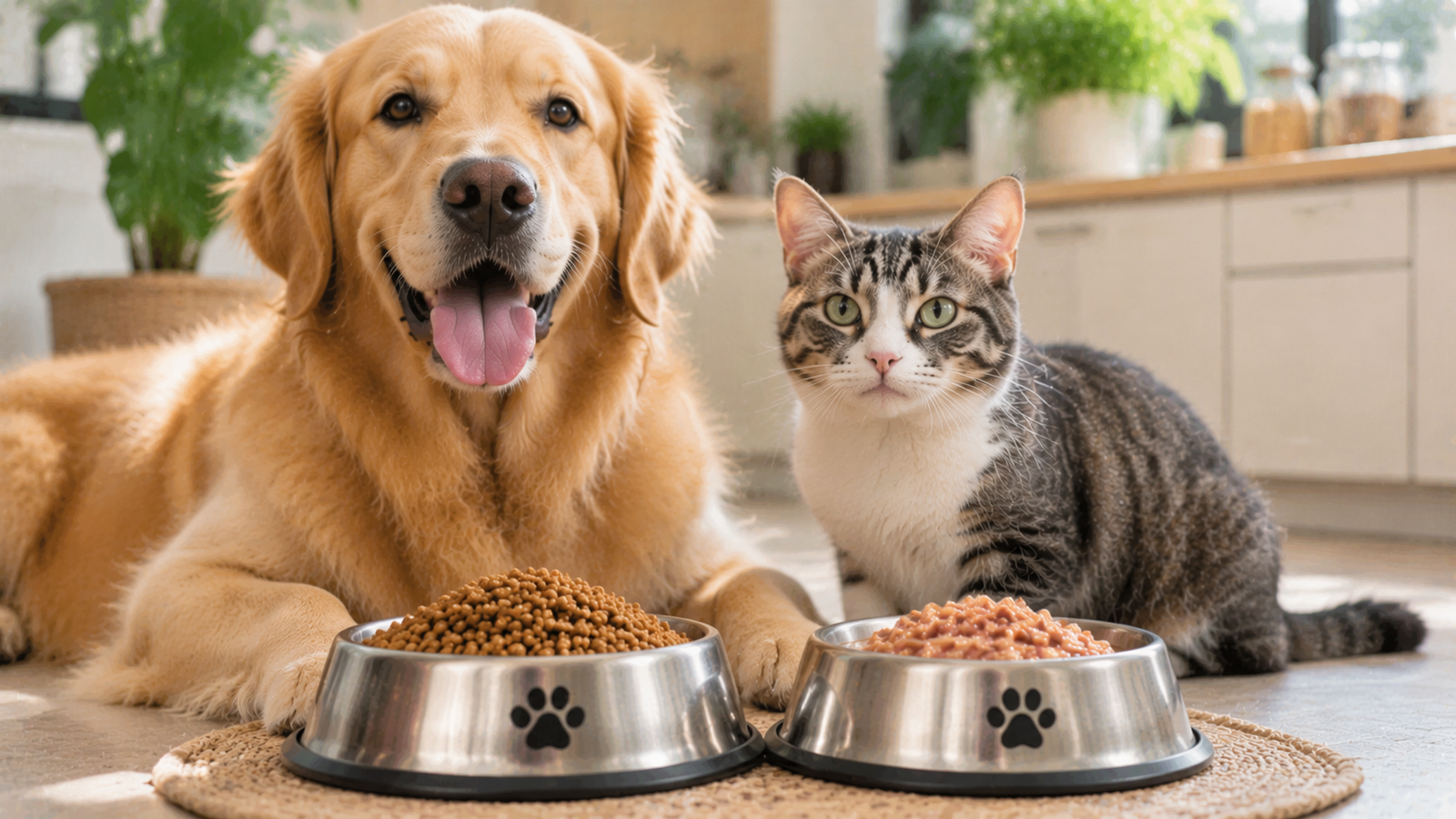
Feeding your pet is about more than simply filling a food bowl. The amount of food your furry friend eats every day plays an important role in their growth, energy, weight, and overall health. Whether you have a playful puppy, a lazy indoor cat, or an active adult dog, understanding their nutritional needs can help you keep them healthy and happy.
But how much food is actually enough?
Advertisement – Continue Reading Below
Some pets need more calories because they spend their days running, playing, and exploring. Others need smaller portions because they are less active or have a slower metabolism. Age, body weight, breed, and health conditions also influence how much food your pet should receive.
Giving your pet too much food can contribute to obesity and other health problems, while feeding too little can leave them without the nutrients and energy they need.
The good news is that determining the right amount doesn’t have to be complicated. With a little planning, regular monitoring, and guidance from your veterinarian, you can create a feeding routine that works for your pet.
Let’s look at how much food dogs and cats need every day and how to make sure you’re feeding them properly.
Why Is It Important to Feed Your Pet the Right Amount?
A balanced diet and appropriate portion sizes are essential for your pet’s well-being.
Food provides the calories, protein, fats, vitamins, and minerals your pet needs to maintain healthy muscles, support their immune system, and stay active throughout the day.
However, feeding more food doesn’t necessarily mean giving your pet better nutrition.
Overfeeding can cause excessive weight gain. Extra body weight puts additional pressure on joints and may increase the risk of diabetes, heart problems, and mobility issues.
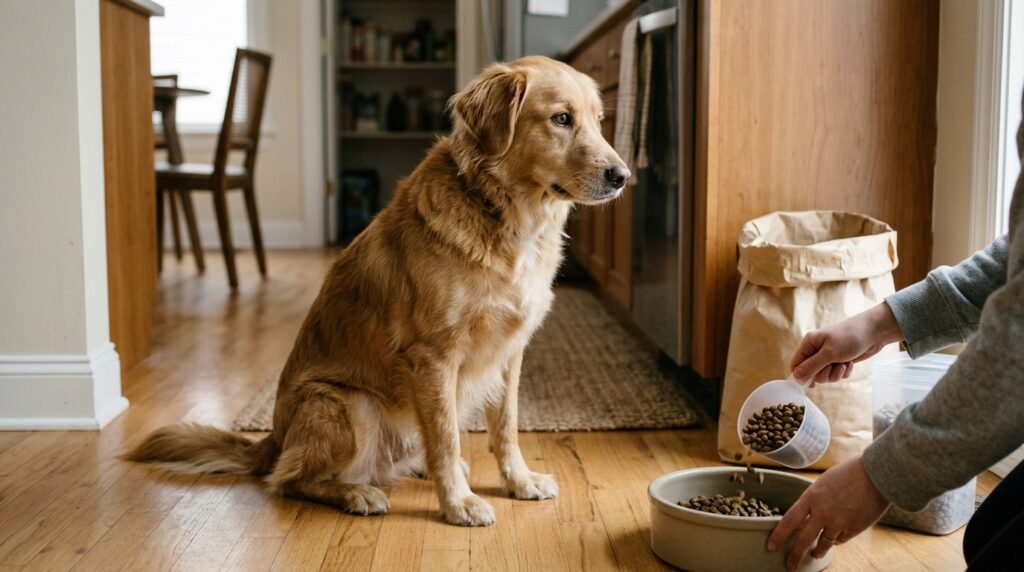
Underfeeding can be equally concerning. Pets that don’t receive enough calories and essential nutrients may experience weight loss, muscle weakness, poor coat condition, and nutritional deficiencies.
Proper portion control helps prevent these problems and supports a healthy body weight.
It also makes it easier to notice changes in your pet’s appetite. If your normally enthusiastic eater suddenly stops finishing meals, you may recognize the change more quickly when you follow a consistent feeding schedule.
How Much Food Should You Give Your Dog Every Day?
The amount of food your dog needs depends on their body weight, age, activity level, and the calorie content of their food.
A small breed dog may need considerably less food than a large breed dog. Similarly, an active working dog generally requires more energy than a companion dog that spends most of the day indoors.
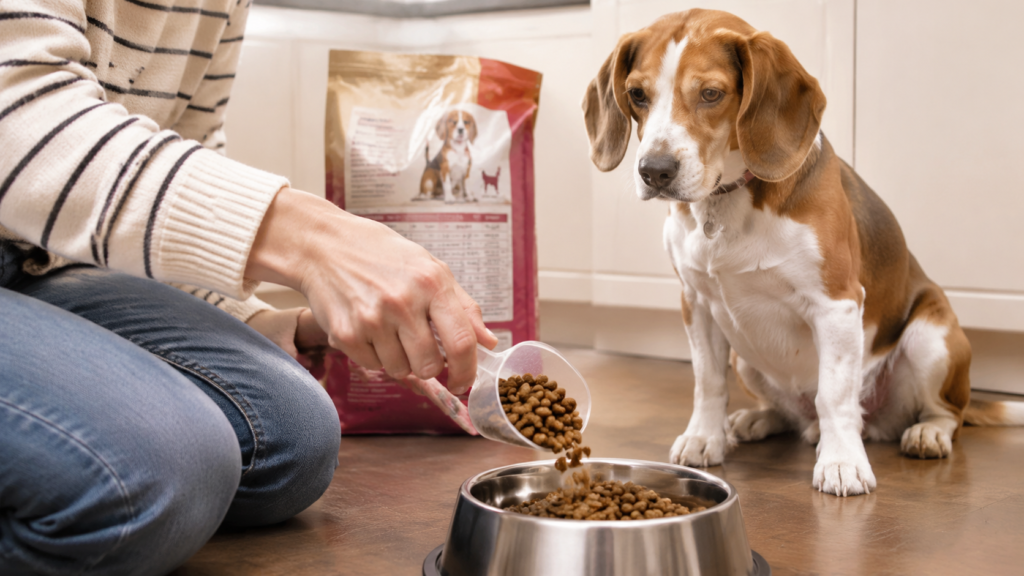
The easiest way to begin is by checking the feeding guidelines printed on your dog’s food packaging.
These charts usually recommend daily food amounts according to your dog’s weight. Remember that the suggested portions are starting points rather than exact requirements.
Feeding Puppies
Puppies need plenty of energy and essential nutrients because their bodies are growing rapidly.
Their diet should contain appropriate amounts of protein, fats, calcium, phosphorus, and other nutrients needed for healthy development.
Young puppies generally need three to four meals throughout the day. As they grow, their feeding schedule can gradually change.
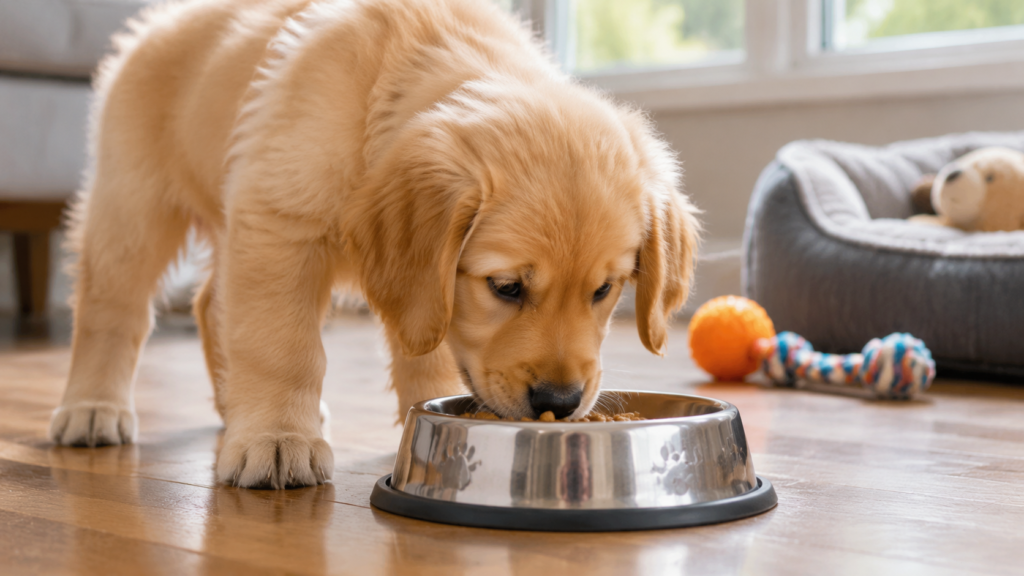
Large-breed puppies may need specially formulated food to support controlled bone and joint development.
Avoid overfeeding puppies in an attempt to help them grow faster. Healthy, steady growth is more important than rapid weight gain.
Feeding Adult Dogs
Most healthy adult dogs do well with two meals per day, usually one in the morning and another in the evening.
Their daily portions should provide enough calories to maintain a healthy weight without encouraging unnecessary weight gain.
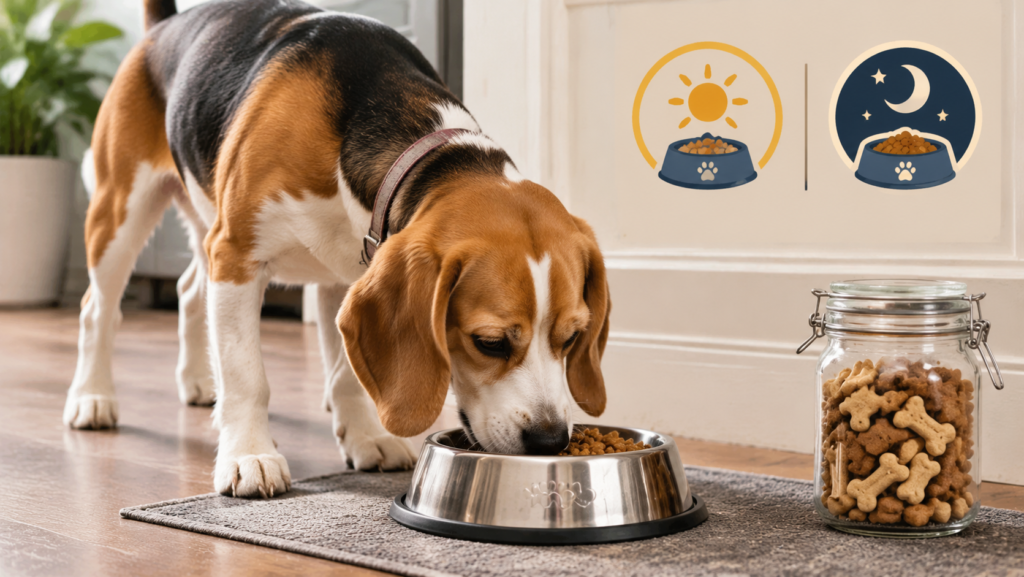
For example, an active dog that enjoys daily exercise may need more calories than a less active dog of the same weight.
Measure each meal carefully and include treats in your dog’s total daily calorie allowance.
Feeding Senior Dogs
Older dogs may become less active as they age.
Their calorie requirements can decrease, although this varies depending on their health, body condition, and activity level.
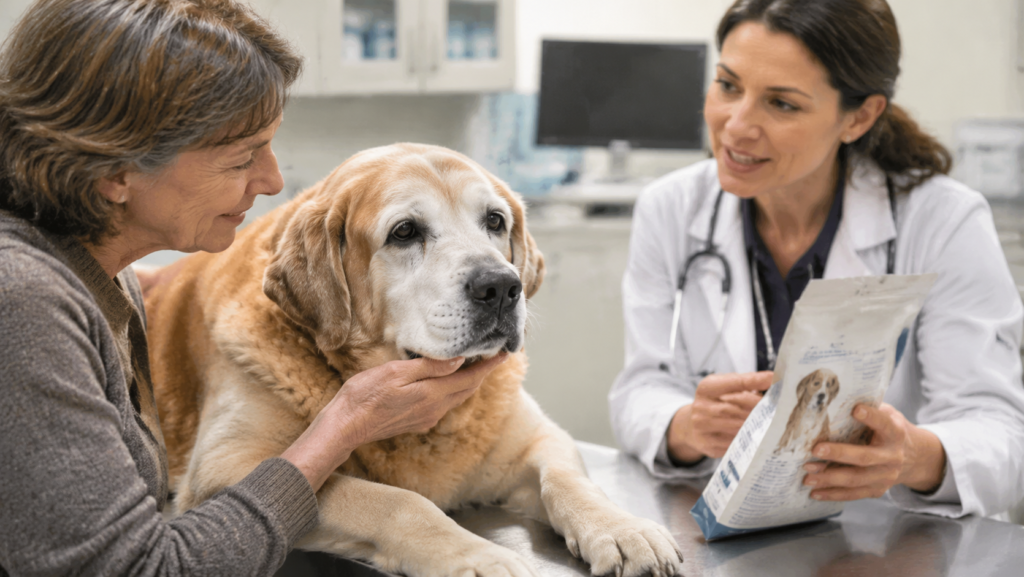
Some senior dogs also develop medical conditions that affect their appetite, digestion, or nutritional needs.
Choose an appropriate complete and balanced diet and ask your veterinarian whether your dog’s current food and portion sizes still meet their needs.
How Much Food Should You Give Your Cat Every Day?
Cats have different nutritional requirements from dogs.
They are obligate carnivores, meaning they need certain nutrients that naturally occur in animal tissues. Their diet must provide adequate animal-based protein, essential amino acids, vitamins, minerals, and fats.
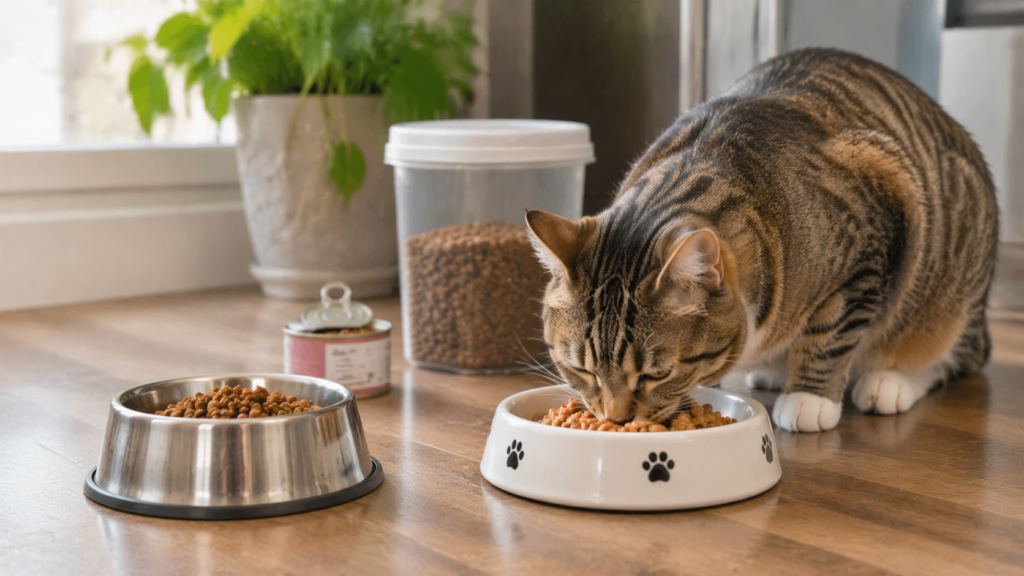
A cat’s daily food requirement depends on its weight, age, activity level, and whether it eats wet food, dry food, or a combination of both.
Indoor cats often need fewer calories than active outdoor cats because they generally get less exercise.
Feeding Kittens
Kittens grow quickly and need nutrient-rich food to support their developing bodies.
During their early months, they typically need three to four small meals daily. As they mature, their feeding schedule can be adjusted.
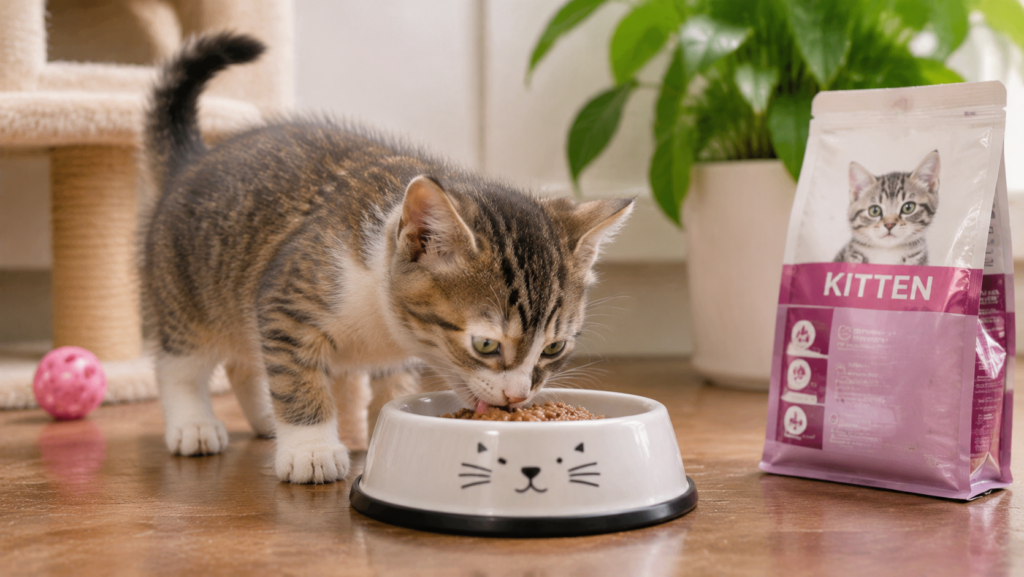
Always choose food specifically formulated for kittens or growth, rather than assuming adult cat food will provide everything they need.
Feeding Adult Cats
Most adult cats do well with two or more measured meals throughout the day.
Some cats prefer smaller meals, so dividing their daily food allowance into several portions can work well.
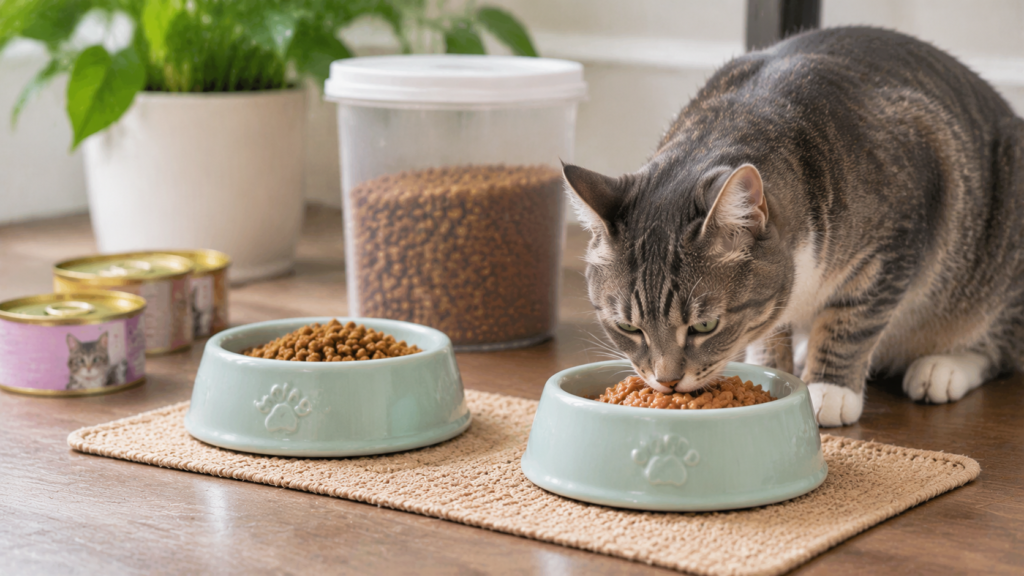
Indoor cats should have their food portions monitored carefully because limited activity can make weight gain more likely.
If your cat eats both wet and dry food, calculate the calories from both types to avoid accidentally overfeeding.
Feeding Senior Cats
Senior cats may experience changes in their metabolism, appetite, dental health, and digestive function.
Some become less active, while others may lose weight because of age-related health conditions.
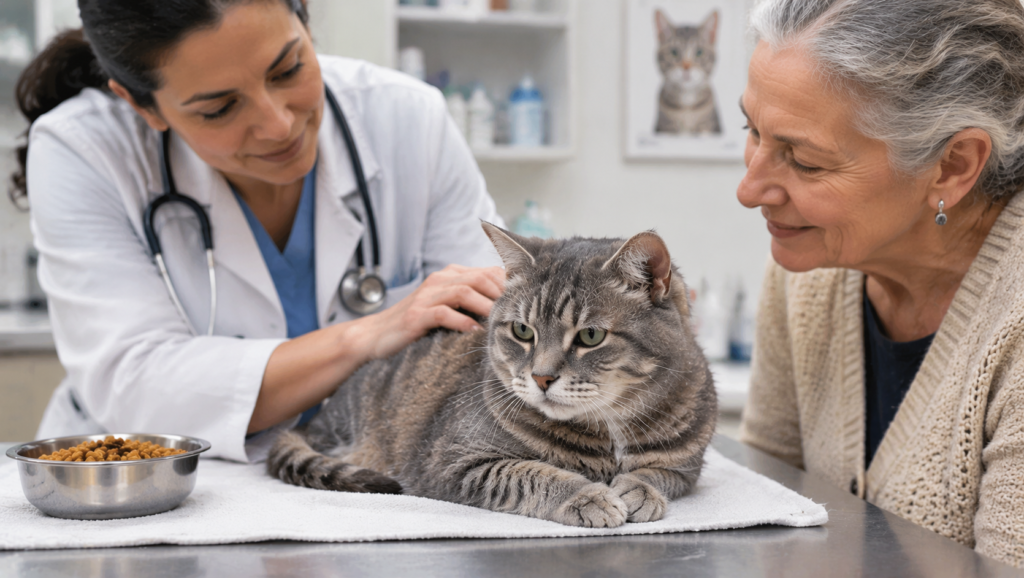
Their feeding plan should reflect their individual needs rather than simply reducing food because they are older.
If an older cat experiences unexplained weight loss or a sudden appetite change, arrange a veterinary examination.
6 Important Factors That Determine Your Pet’s Daily Food Portions
There is no single feeding amount that works for every pet. Before deciding how much food to serve, consider these six factors.
1. Age and Life Stage
A growing puppy or kitten has different nutritional requirements from a fully grown animal.
Young pets need enough calories and nutrients to support healthy development. Adult pets generally need portions that maintain their ideal body weight.
Senior pets may need dietary adjustments depending on their activity levels and health conditions.
Always select food that is appropriate for your pet’s life stage.
2. Body Weight and Condition
Your pet’s weight is one of the most useful starting points when estimating daily food requirements.
However, weight alone doesn’t tell you whether your pet is healthy.
Body condition is equally important.
You should generally be able to feel your pet’s ribs without pressing too hard. When viewed from above, your pet should have a visible waist, and from the side, their abdomen should tuck upward behind the rib cage.
If you cannot easily feel the ribs or notice significant weight changes, speak with your veterinarian about appropriate portions.
3. Activity Level
An energetic dog that goes for long walks and enjoys outdoor activities may burn more calories than a dog that spends most of the day relaxing.
Cats also have different activity levels. Some enjoy climbing, chasing toys, and exploring, while others prefer sleeping in comfortable spots.
Adjusting food portions according to activity can help maintain a healthy balance between calorie intake and energy expenditure.
4. Breed and Size
Breed and body size can influence nutritional requirements.
Small dogs, large dogs, and different cat breeds may have different energy needs.
Large-breed puppies, in particular, require carefully balanced nutrition to support healthy skeletal development.
Rather than choosing portions based only on breed, consider your pet’s actual weight, body condition, and activity level.
5. Health and Medical Conditions
Certain medical conditions can affect how much food your pet needs.
For example, pets with diabetes, kidney disease, digestive disorders, or food allergies may require specialized feeding plans.
Some medications can also affect appetite and body weight.
If your pet has a medical condition, consult your veterinarian before changing their diet or reducing their food portions.
6. Type of Food
Not all pet foods contain the same number of calories.
A small serving of calorie-dense dry food may provide more energy than a larger serving of some wet foods.
Check the nutritional label for calorie information, usually listed as kilocalories per cup, can, pouch, or kilogram.
This is why measuring food by weight or using the manufacturer’s calorie information is more reliable than estimating portions by eye.
How to Calculate Your Pet’s Daily Food Requirements
One practical way to determine how much food your pet needs is to start with their daily calorie requirement.
Veterinarians often use a formula called the Resting Energy Requirement (RER):
RER = 70 × (body weight in kg)^0.75
This estimates the energy a pet needs at rest.
A veterinarian can then apply an appropriate factor based on the pet’s age, activity level, reproductive status, and health to estimate daily calorie needs.
For example, a healthy adult dog’s calorie needs may differ from those of a growing puppy or a senior dog.
Once you have an estimated daily calorie allowance, check how many calories are in your pet’s food.

Daily food amount = Daily calorie requirement ÷ Calories per unit of food
For example, if a veterinarian recommends 400 calories per day and the food contains 400 calories per cup, the starting daily allowance would be one cup.
This is only an illustrative calculation, not a feeding recommendation for every pet.
Remember to include treats, snacks, and food used for training in the daily calorie total.
Signs You May Be Feeding Your Pet Too Much
Some pets seem hungry all the time, even after eating a complete meal.
However, begging for food doesn’t necessarily mean your pet needs additional calories.
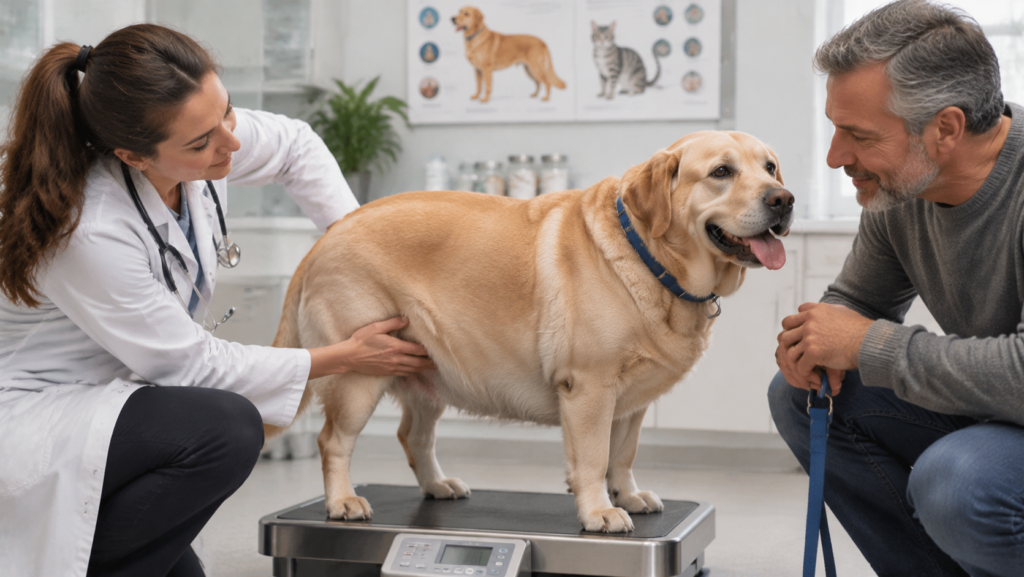
Watch for these common signs of overfeeding:
- Gradual weight gain.
- Difficulty feeling the ribs.
- Loss of a visible waistline.
- Reduced interest in exercise and play.
- Excessive fat around the abdomen.
- Difficulty moving comfortably.
If you notice these changes, review your pet’s feeding routine and arrange a veterinary weight assessment.
Avoid suddenly cutting their food portions. Gradual, veterinarian-guided changes are generally safer and more sustainable.
Signs Your Pet May Not Be Eating Enough
Underfeeding can also affect your pet’s health.
Possible warning signs include:
- Unexplained weight loss.
- Visible ribs, spine, or hip bones.
- Loss of muscle mass.
- Low energy or unusual tiredness.
- Poor coat condition.
- Persistent hunger or changes in eating behavior.
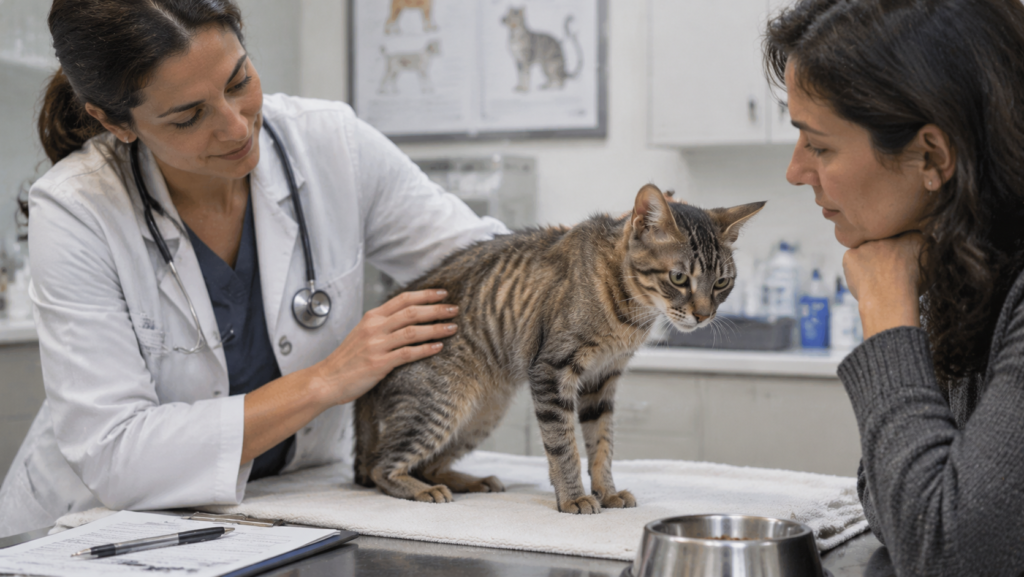
These signs can also indicate an underlying medical problem.
If your pet is losing weight unexpectedly, arrange a veterinary checkup rather than simply increasing food portions.
8 Practical Tips for Creating a Healthy Pet Feeding Routine
Knowing how much food your pet needs is only part of the process. Maintaining a consistent feeding routine is equally important.
Here are eight habits that can make feeding easier and healthier.
1. Measure Every Meal: Use a kitchen scale or appropriate measuring cup instead of guessing how much food belongs in the bowl.
2. Follow a Consistent Schedule: Feed your pet at regular times each day. This makes it easier to monitor appetite and maintain portion control.
3. Limit Treats: Treats and snacks should generally make up no more than 10% of your pet’s daily calories. Most nutrition should come from a complete and balanced diet.
4. Provide Fresh Water: Keep clean drinking water available throughout the day. Proper hydration is essential for overall health.
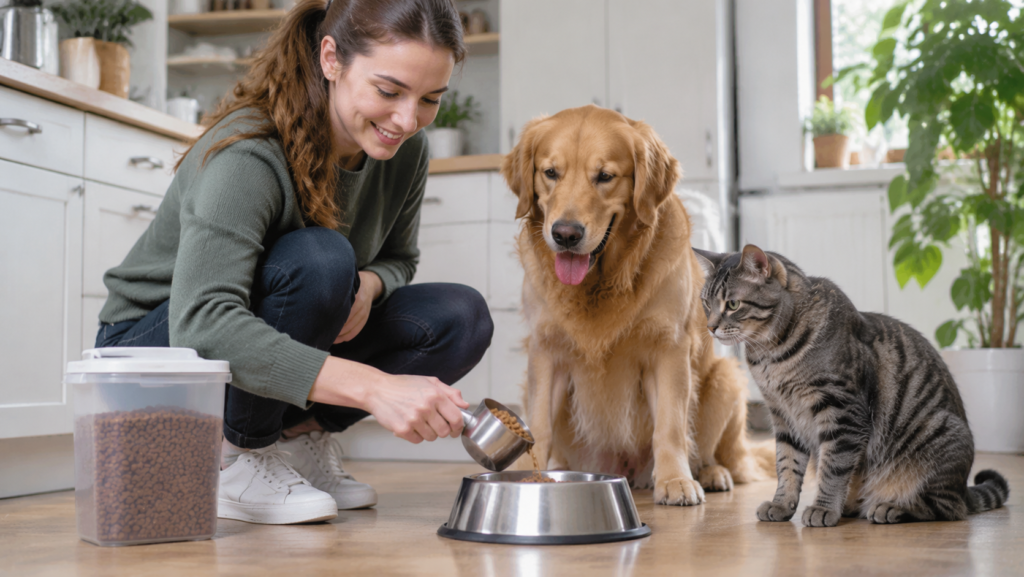
5. Avoid Too Many Table Scraps: Human food can add unnecessary calories and may contain ingredients that are toxic to pets, such as onions, garlic, grapes, and chocolate.
6. Monitor Body Weight: Weigh your pet regularly and keep track of noticeable changes. This helps you recognize whether their current feeding plan is working.
7. Store Pet Food Properly: Keep food in a clean, dry, and secure container. Follow the packaging instructions to maintain freshness and prevent contamination.
8. Adjust Portions When Necessary: Changes in age, activity, weight, and health may mean your pet needs a different amount of food over time.
Wet Food vs. Dry Food: Which Is Better for Your Pet?
Choosing between wet and dry food can be confusing for pet owners.
Both options can provide essential nutrients when they are complete and balanced for the appropriate species and life stage.
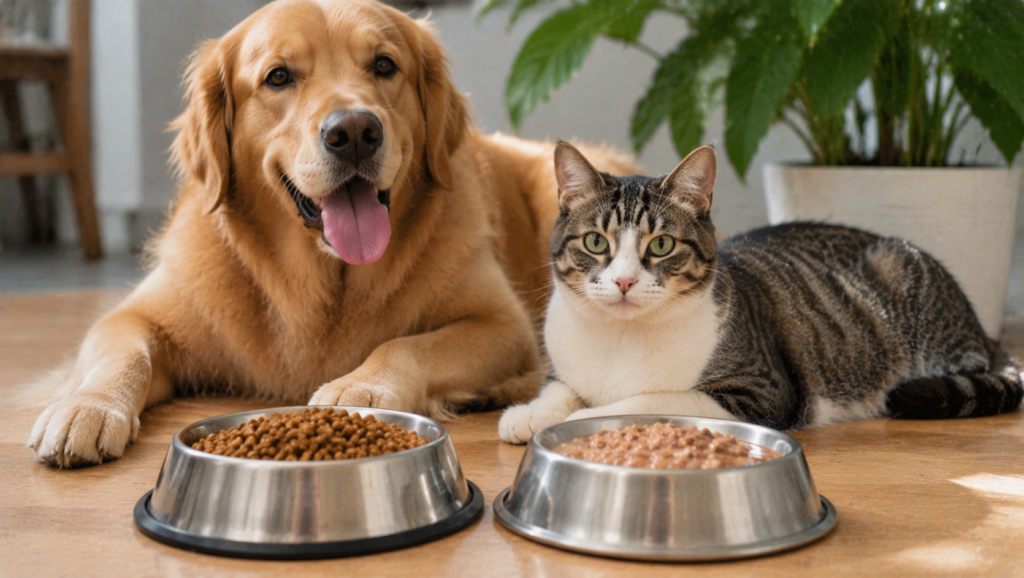
Dry food is convenient, easy to store, and simple to measure. It can also be more economical for some households.
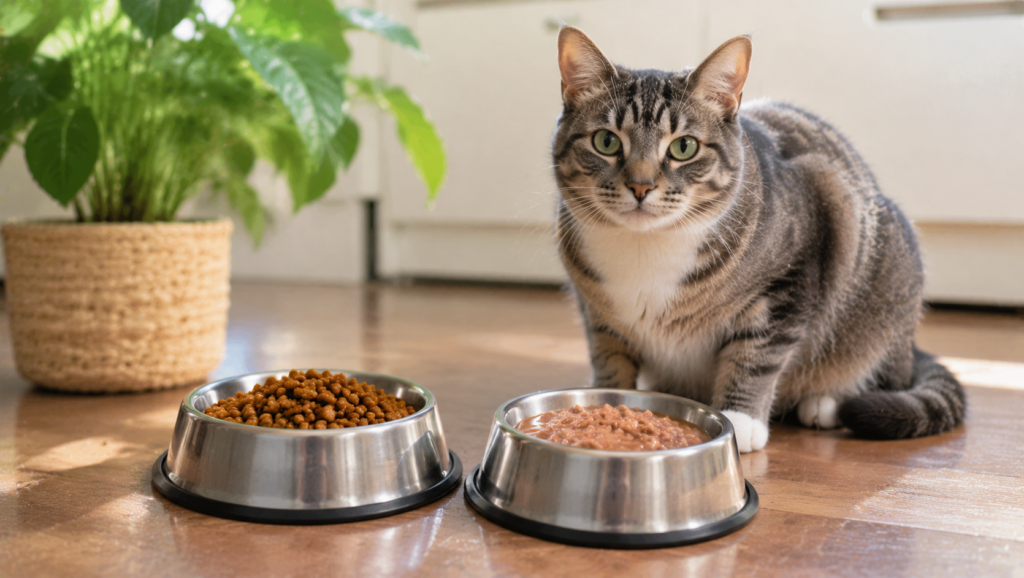
Wet food contains considerably more moisture, which can help increase your pet’s water intake. Its softer texture and stronger aroma may also appeal to picky eaters.
Some owners choose to combine wet and dry food to provide variety.
There is no single best option for every pet. What matters most is nutritional quality, appropriate portion sizes, and your pet’s individual health requirements.
If you combine different foods, calculate their calories together to avoid exceeding your pet’s daily allowance.
Common Pet Feeding Mistakes to Avoid
Even caring pet owners can make feeding mistakes without realizing it.
One common mistake is filling the bowl whenever a pet begs for food. This can result in excessive calorie intake, particularly in pets that are less active.
Another mistake is relying entirely on the feeding chart printed on the food package. These charts are useful starting points, but individual pets may need different portions.
Giving too many treats is another problem. Small snacks may seem insignificant, but their calories can quickly add up.
Finally, avoid changing your pet’s diet suddenly. If you need to introduce a new food, gradually transition over approximately seven to ten days, unless your veterinarian recommends a different approach.
Small, consistent improvements can make a meaningful difference to your pet’s long-term health.
Frequently Asked Questions About Pet Feeding
How many times should I feed my pet every day?
Most healthy adult dogs do well with two meals per day. Adult cats can receive two or more measured meals. Puppies and kittens generally need more frequent meals to support their growth.
Should I leave food out all day for my pet?
Free-feeding may work for some animals, but it can make portion control difficult. Scheduled meals are often a better choice, particularly for pets that tend to overeat.
Can I feed my pet more if they seem hungry?
Not necessarily. Some pets beg for food even when they have already received enough calories. Check their body condition and daily food allowance before increasing portions.
Should pets eat more during winter?
Not always. Indoor pets may have similar calorie requirements throughout the year. Pets exposed to cold weather may need additional energy depending on their environment, activity, and body condition.
Is it okay to mix wet and dry pet food?
Yes. Complete and balanced wet and dry foods can generally be combined when appropriate for your pet. Just remember to account for the calories from both foods.
How often should I change my pet’s food?
You don’t need to change your pet’s food regularly if they are doing well on a complete and balanced diet. Change their food when there is a nutritional reason, a life-stage change, or veterinary advice to do so.
How do I know if my pet is at a healthy weight?
You should generally be able to feel your pet’s ribs without excessive pressure, see a waist from above, and notice an abdominal tuck from the side. Your veterinarian can assess their body condition and ideal weight more accurately.
Final Thoughts
Feeding your pet the right amount every day is one of the simplest ways to support their health and happiness.
However, the ideal portion size isn’t determined by weight alone. Age, activity level, breed, food type, and individual health needs all play an important role.
Start by checking your pet food’s feeding guidelines, measure meals carefully, and monitor your pet’s body condition over time.
Remember that treats count toward daily calories, and fresh water should always be available.
Most importantly, work with your veterinarian to establish a feeding plan that meets your pet’s nutritional requirements.
A little attention to portion sizes today can help your furry companion maintain a healthy weight, enjoy more energy, and live a happier life for years to come!